
And the answer is….A Klingsor gramophone, well done to those of you who answered correctly!
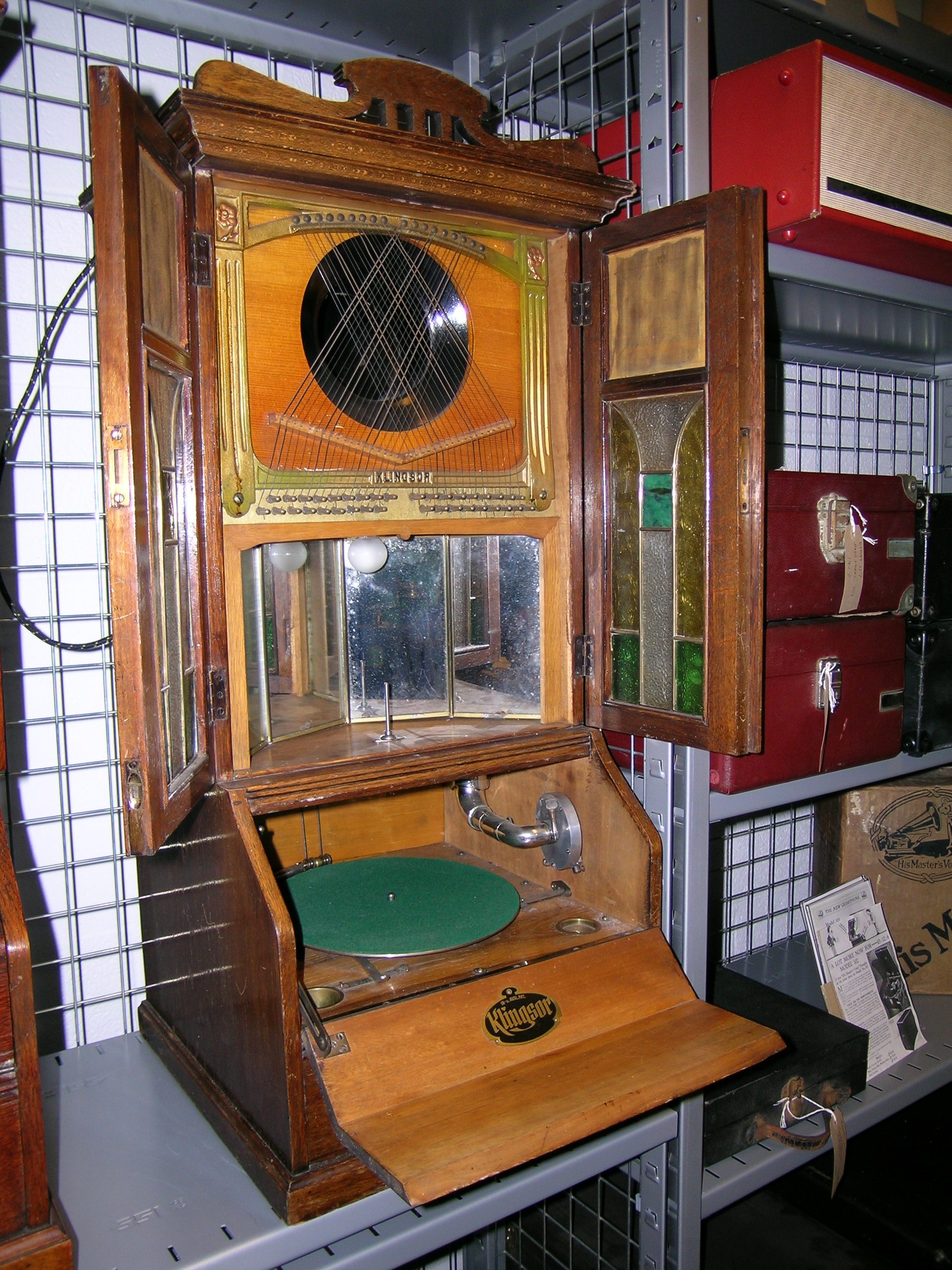
Courtesy of EMI Group Archive Trust
And the answer is….A Klingsor gramophone, well done to those of you who answered correctly!
Friday mystery object is back!
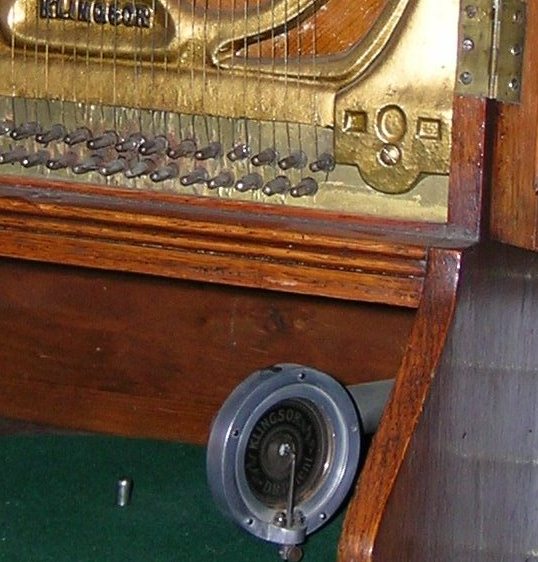
So, what’s this then?
By Roger Neil

I’ve been listening to recordings made in the 1930s and early 40s by the black American contralto, Marian Anderson. She’s one of my very favourite singers, not only among altos, and one of the finest songs on the CD is her rendition of Stephen Foster’s ‘My Old Kentucky Home’.
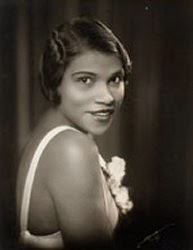
It seems such a pity that so many of Foster’s songs – which include ‘Campdown Races’, ‘Jeanie with the Light Brown Hair’, ‘Oh! Susannah’, ‘Old Folks at Home’ (also known as ‘Swanee River’), ‘Beautiful Dreamer’ and ‘Old Black Joe’ – are no longer deemed PC in modern America and have fallen out of the repertoire.
Impoverished, Foster died in Manhattan in 1864, aged just 37. America’s Schubert!
If you have loved this article by Roger Neil you can find more articles on the Official Roger Neil blog.
Name: William Barry Owen
Born: 15 April 1860
Resident: Born in Vineyard Haven, Massachusetts
Occupation: Sent to London to raise investment funds for the Gramophone Company to expand into Europe
Loves: Music, Musicians, Gambling, London high society parties
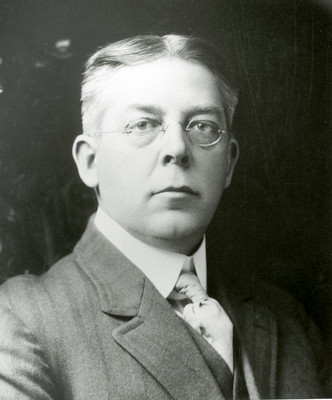
In July 1897 William Barry Owen resigned from his post with the National Gramophone Company in the United States and sailed for Britain. He was sent by Emile Berliner, inventor of the Gramophone and flat disc to set up the company in England and find investors. When he arrived he met a young Welsh lawyer; Trevor Lloyd Williams who became his co-founder of The British Gramophone Company in 1899.
Owen was an excellent sales man, having refined his selling talents as a sales man during his law degree at Amherst College. He was also a gambler who enjoyed the high stakes of starting up new ventures and more importantly he enjoyed living the high life that could be achieved if successful and so he jumped at the potential high profits in Berliner’s new Gramophone.
Initially he threw himself into the work but found high society London to be a tough crowd to crack, the Gramophones were selling but he found it difficult to attract investors to help build the business. It was his idea to bring in the Lambert Typewriter as an insurance product in case the Gramophone flopped. However, as fate would have it, the Lambert typewriter failed to bring in much revenue and The Gramophone Company stopped production in 1904. At this point Owen seemed to loose interest in the business, he remained on the board for two more years and then left The Gramophone Company altogether in 1906.
After resigning he left Britain and returned home to the United States where he made several unsuccessful attempts in the agricultural business. By 1910 he had spent all of his money and was riddled with debt. He spent the rest of his life living off a pension paid jointly by Victor Talking Machine and The Gramophone Company.
By Roger Neil
Someone started a thread on the unofficial BBC Radio 3 message boards asking for nominations for the top ten sopranos.
It seemed to me that the emerging lists were filled with the usual suspects, and since I’m currently in the process (with Tony Locantro) of finishing up a 4 x CD set for Decca Australia entitled ‘From Melba to Sutherland: Australian Singers on Record’, this is the list I offered:
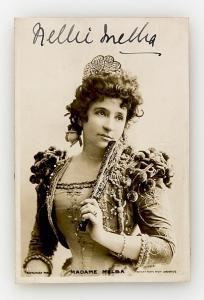
Nellie Melba
Frances Alda
Elsa Stralia
Florence Austral
Margherita Grandi
Marjorie Lawrence
Sylvia Fisher
Joan Hammond
Elsie Morison
Joan Sutherland
What a team. Other nominations?
If you have loved this article by Roger Neil you can find more articles on the Official Roger Neil blog.
The lovely folks from the EMI Archive Trust sat down with record industry legend – Tris Penna as a part of their Memories of EMI campaign. Tris Penna worked for EMI for 10 years from 1987 to 1997 as a producer, A&R and manager. In this video he shares a short memory of his time at Abbey Road studios and the people he worked with!
If you are interested in taking part in this campaign you can contact the EMI Archive Trust: info@emiarchivetrust.org.
On the 9th of February 1964, The Beatles played on the Ed Sullivan show in the US for the first time. They were an absolute hit and the boys were at the forefront of the invasion of British music into American popular culture! 50 years on and it’s still a cracking performance!
A classic from the vinyl era – Gerry & The Pacemakers with You’ll Never Walk Alone
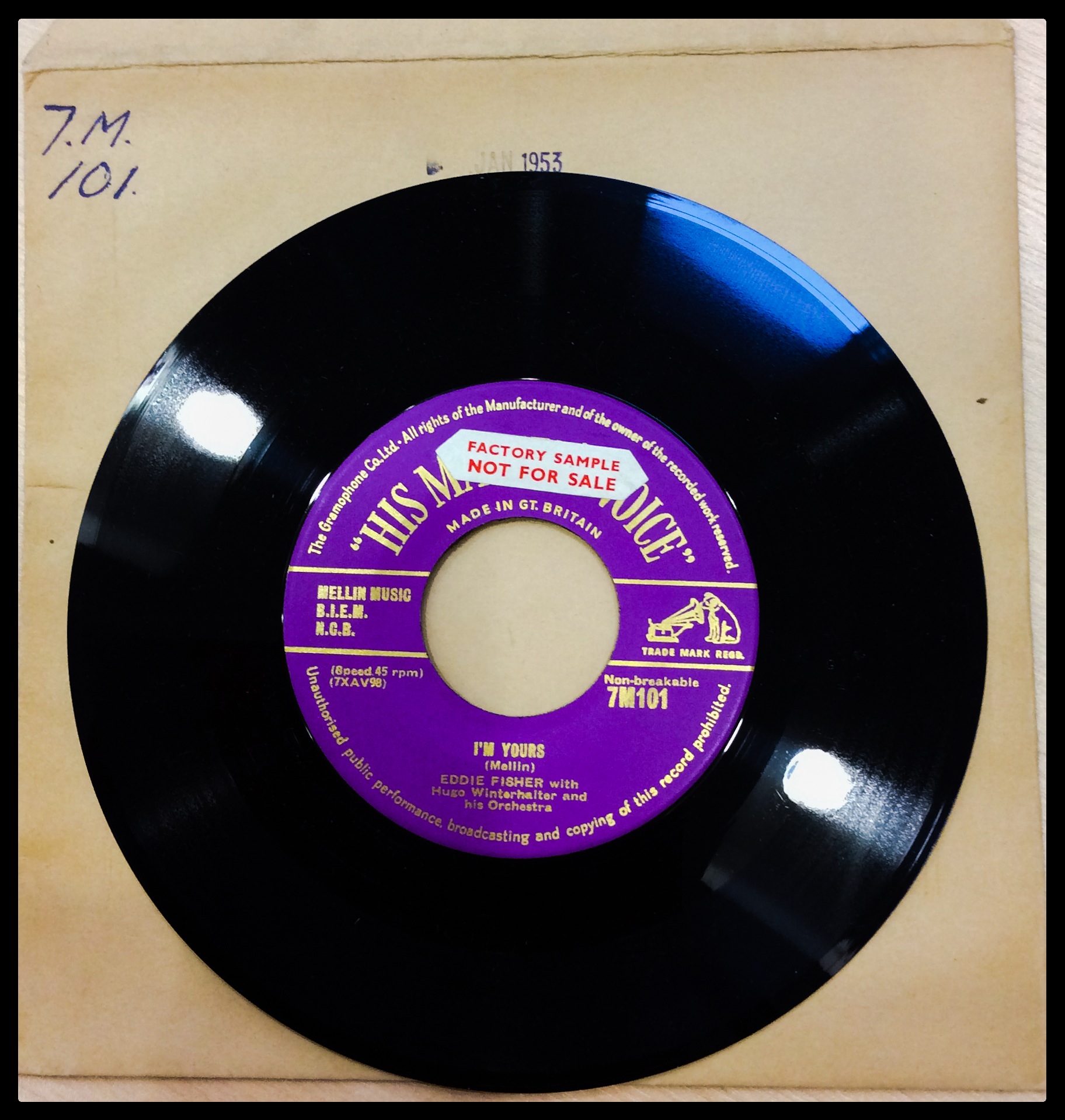
Have you ever wondered when the vinyl era started in the UK? The hound has come across some very exciting records from the EMI Archives relating to the start of vinyl. Here are the very first vinyl 45’s to be pressed by EMI.
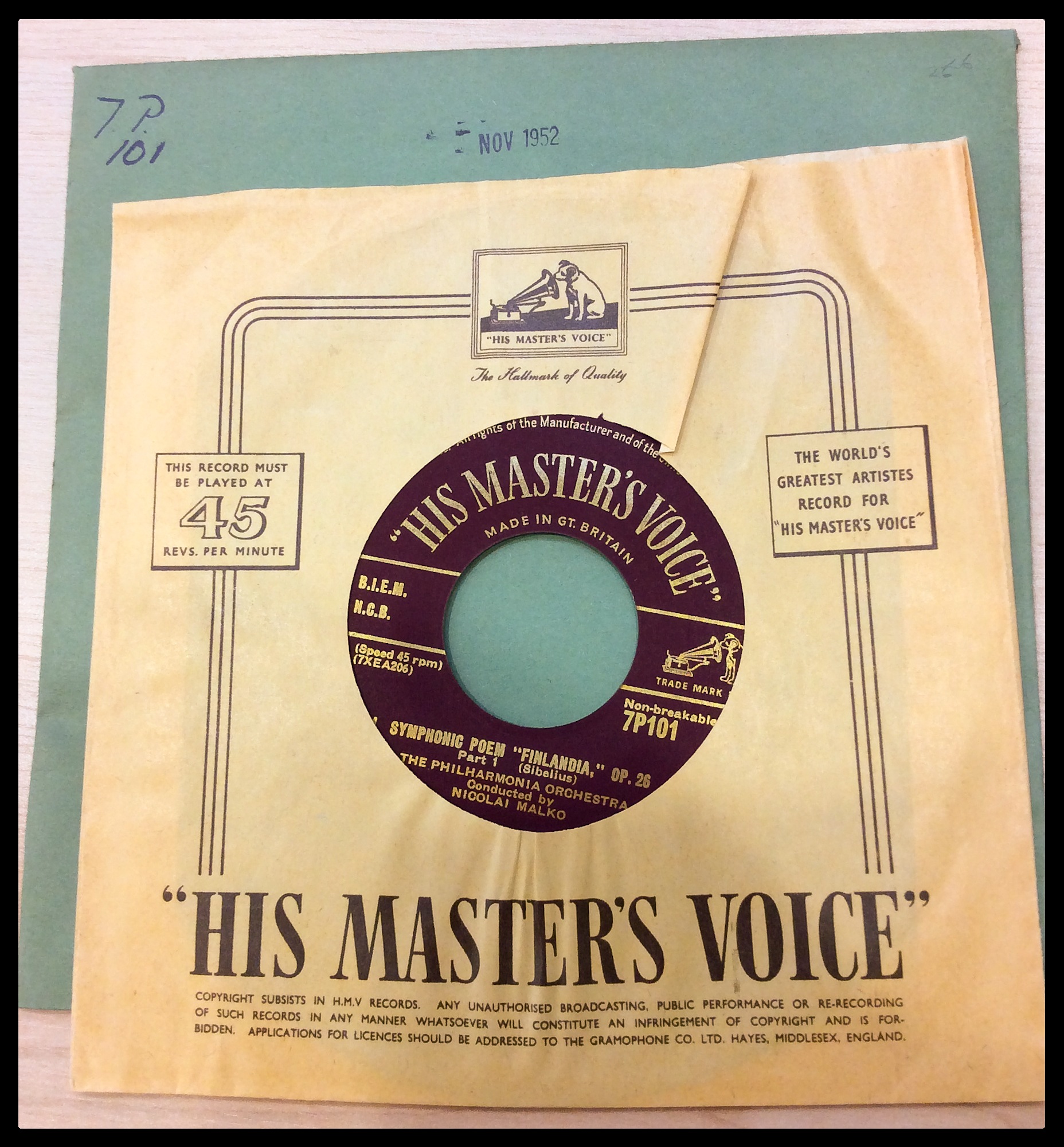
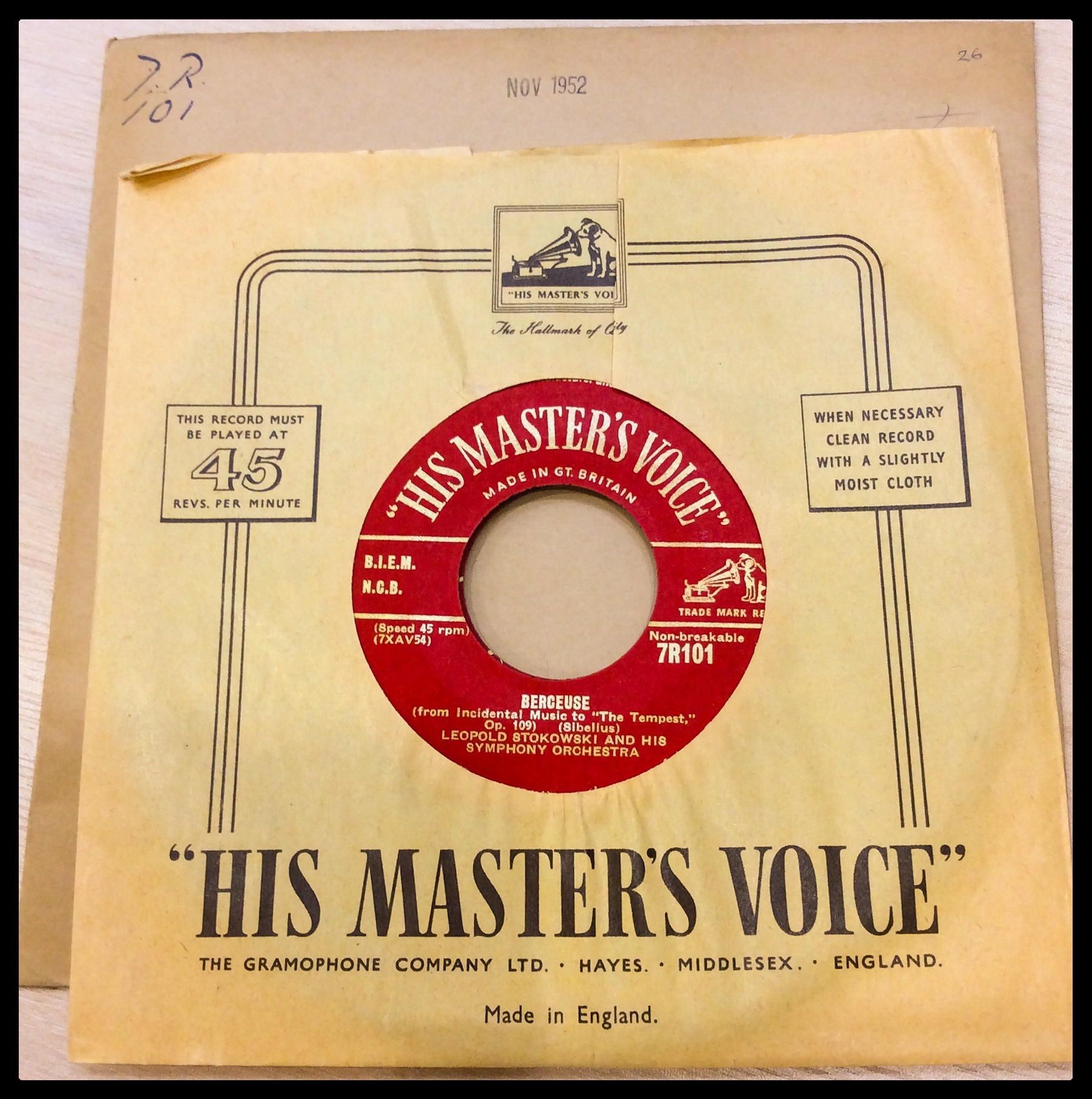
Valse Triste and Berceuse by Leopold Stokowski and his symphony orchestra, were the very first 45 singles vinyl issue on the famous red His Master’s Voice label R-100 series in November 1952.
In the same year The Philharmonia Orchestra Conducted By Nicolai Malko was also released by His Master’s voice records as one of the first 45rpm vinyl singles.
The first 45 pop vinyl record was Eddie Fisher with “that’s the chance you take” and I’m yours” released on a 45rpm vinyl single.
Use these links to find out more about 45 vinyl singles: www.45cat.com
Lets say that you are a scientist, a physicist and mathematician. You are a genius and have just invented a new technology that could revolutionise the music industry… How would you pitch the idea to the directors and business team of your company, they are not scientists, but hold the power to release the funds you need to finish off the work?
Well if you were Alan Blumlein and had just developed stereo technology at EMI’s Central Research Laboratories, you’d create a large scale model. His model showed how one needle in a specially cut groove on a record could give out two signals simultaneously resulting in a more stereophonic sound. Here is a short video of that model in action. Notice the difference in readings between the two dials.
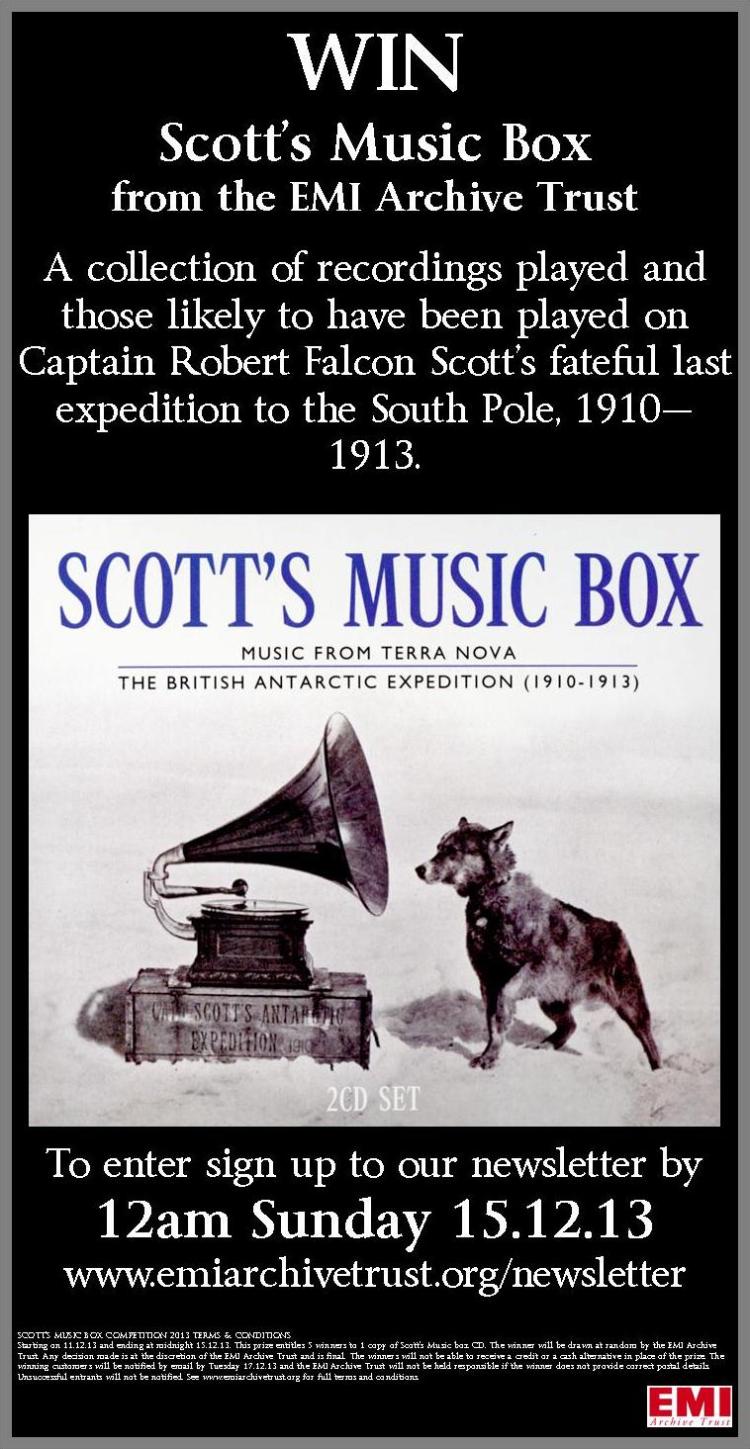
The hound has come across this competition from the folks over at the EMI Archive Trust and thought it was worth sharing with you all! Sign up and Good luck!
This Christmas we are offering you the chance to WIN one of 5 copies of Scott’s Music Box from the EMI Archive Trust.
This double CD is mixture of music hall and theatre favourites, popular contemporary songs and instrumentals, operatic and classical excerpts, and comedy / spoken word from the time when Captain Scott made his last expedition to the South Pole, 1910 – 1913.
To win a copy of Scott’s Music Box simply sign up to our NEWSLETTER by midnight on Sunday 15th December 2013.
If you have already signed up to the newsletter then you are already included in the draw to win a copy of the Scott’s CD!
 Sound Of The Hound