This week marks the start of Glastonbury 2013, with the show starting on Wednesday 26th June. Since its beginning in 1970 Glastonbury Festival and EMI had a great relationship with many of EMI’s artists headlining the show.
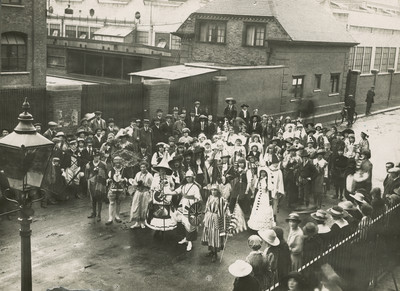
Lets hope all you festival goers have as good a time as these folk from The Gramophone Company on their Annual Sports Day, July 1918.
British summer time is in full swing and today’s Summer Solstice is a celebration of that! It turns out that EMI recording artists Pink Floyd have one of the world’s longest songs: “Echoes.”
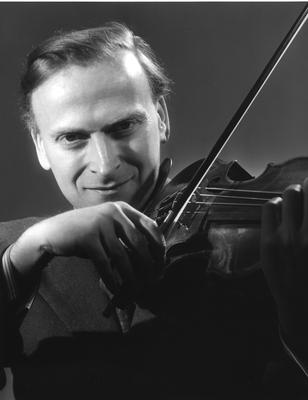
This summer (13 June – 11 August) the Ashmolian Museum in Oxford has a exceptional exhibition celebrating the work of the seventeenth century master crafter of string instruments; Antonio Stadivari. The rarely seen pieces will include a 1721 Stradivarius violin played by the famous EMI classical violinist Yehudi Menuhin before its auction at Sotheby’s 1971
Stadivari violins are considered the finest in the world, played only by the best professional musicians and held in private collections amoungst royalty.
Yehudi Menuhin photographed by Angus McBean. Copyright: EMI Music Ltd
Menuhin was an EMI recording artist for almost 70 years. He made his first recording in November 1929, aged just 13 and his last recording in 1999 aged 83. As a violinst and a conductor he recorded over 300 pieces for EMI.
The Hound heartily thanks Roel Kruize in bringing to our attention the artist Peter Kemp.
Peter’s Kemp’s award winning photography is best described as “Story Telling Pictures”. The image below is the second in a series of 4 photographs in the “His Masters Voice – HMV series” which pays homage to this great music label under the name “Musica”. Kemp is truly dedicated to his art – usually spending months preparing each photograph to ensure that his vision and creativity is fully realised. He has been praised for his dynamic concepts as well as his eye for capturing an entire narrative within each image.
This photograph featuring the model Raffaela is a stunning portrayal of the early years in the Muisca/HMV Company. Notably it was a nominee in the “Framed Artist Award, 2013”. (The final winner was announced in Las Vegas, USA on March 12.)
The “His Masters Voice – HMV series” came about when Peter Kemp’s cousin who is connected to Roel Kruize wife’s family heard that Kruize was the proud owner of a very special gramophone, a replica of Nipper and above all a copy of the famous painting. (One of only three in existence in Holland.) Kemp approached Kruize to borrow the art pieces for a long weekend. Despite being unfamiliar with Kemps work Roel was excited by the idea. Needless to say when Kruize received a copy of the photographs he was over the moon. The objects featured in the “HMV storytelling pictures series” belong to Kruize and therefore due credit goes to him for making this series possible. Roel Kruize devoted his life and career to the success of EMI and HMV . He worked for no other company. Was the senior manager of the Dutch EMI Company for many years and had positions in EMI International in A&R and Marketing worldwide (excluding USA.) He has a profound love for EMI Classics and its phenomenal heritage
Some grooves make you shake your bootie. A stadium anthem can get you swaying with lighters in the air. And some music brings tears to your eyes.
Image: Ludwig Van Beethoven by Neil Shevlin – All rights reserved
There are certain pieces of music that make me cry. Consistently. Spontaneously. Involuntarily. It requires conscious effort to shut the tears off. The tears differ in kind, are evoked for different reasons. I am intrigued by music’s ability to manipulate my emotions. I am perplexed as to why, from time to time, I deliberately subject myself to stimuli which I know will result in making me cry. I can only guess at how unsettling it must be for B to see me standing there, headphones encasing my head, tears rolling down my cheeks. She must wonder why too.
Sometimes, it is that a piece of music has an association with a specific event in my life. Regardless of its musical or lyrical content, it triggers an emotional response in the same way a smell can take you back to nursery school (something that happens to me when passing by the Swiss Cottage McDonalds – only that branch does it) . Effective – but this is a superficial evocation. It isn’t the music per se, but an external relationship between the music and my life which the composer and performer had no knowledge of or control over. For me, the song Let Her Cry by Paul Bollenback performed by Hootie & the Blowfish is the best example. It’s not a brilliant song. It is brutally sad in its own right, but what gives it the power to make me cry uncontrollably is that it was playing on the radio constantly as I drove back and forth to the hospital in LA during the week in which my mother died. I also found the lyrics strangely relevant -as though Hootie knew the situation and was singing for me.
Thus, Let Her Cry, unintentionally, became the official soundtrack to that short but traumatic period of my life. I cannot listen to it without that week materialising in my mind as though it were yesterday. It is painful to remember. And yet, from time to time, I deliberately put it on knowing full well what the result will be. Though it rekindles the sadness, it also brings back the memory of my mother more powerfully and tangibly than anything else. I just wish I had a happy song that had the same effect.
More interesting to me is music that makes me cry not because it is acting simply as a cheap emotional trigger, but that the music embodies emotion within itself and communicates that to me directly. It becomes part of my internal emotive mechanisms and drives them without my conscious participation. There are two pieces of instrumental music which make me cry – and for completely opposite reasons: one because it sounds so sad and the other because it sounds so beautiful.
Classical music has many examples of exquisitely sad pieces – Albinoni’s Adagio in G minor and Barber’s Adagio for strings are obvious and well worn examples – but the one that does it for me every time is the 2nd movement of Beethoven’s 7th Symphony and specifically as performed by the Columbia Symphony Orchestra conducted by Bruno Walter. I discovered this piece in a strange way when I was a teenager. A solo piano arrangement of it was used as the background music in a Peanuts cartoon – the one with Charlie Brown – to evoke Charlie’s sad-sack, dumped on existence. The music grabbed me immediately and it took some good deal of investigation to discover what it was.
The 2nd of the 7th has been a guaranteed tear-jerker for me ever since. I don’t know why, but that piece just makes me cry. What can I say? Beethoven clearly has his finger on my musical sad-button with that one. It covers all levels of sadness, running the gamut from a sombre whimper to Burghers of Calais torment – the way the wailing theme is handed back and forth between the upper and lower registers. Very finely crafted and very, very minor. By the way, I’ve tried many other versions: Von Karajan, Rattle, Toscanini and many other conductors. In my opinion, no one gets Ludwig Van like Bruno.
On the other side of the spectrum is an instrumental electric guitar piece by Joe Satriani called Friends from his album The Extremist. It’s a crunch chords and wheedley-woo number, but unlike most power-rock played by pyrotechnic Strat abusers, it is incredibly melodic and any fretboard acrobatics are all in the service of the music, not the other way around. Undoubtedly there is a component of admiration involved because I know how much is involved in playing it from a technical perspective. Perhaps I’m crying because I know I’ll never play that well. Not really – I just think it’s gorgeous. The lines soar and lift my heart with them.
Finally, there are songs that make me cry primarily because of the lyrics. Lyrics are lyrics because they are meant to be set to music. The two must support and reinforce each other. It is frequently the case that great lyrics make lousy poems. There are a number of songs with evocative, emotive lyrics that move me to tears: The Cruel War performed by Peter Paul & Mary, Sondheim’s Send In The Clowns performed by Judy Collins – but the song that really does me in every time is Comfortably Numb by Roger Waters & David Gilmour performed by Pink Floyd. Each time I think: “no, not this time”, but as it works its way through the second verse I lose it: “When I was a child I caught a fleeting glimpse/ Out of the corner of my eye/ I turned to look but it was gone / I cannot put my finger on it now/ The Child has grown, the dream is gone/ I have become comfortably numb“.
These words, set to the backdrop of the sombre, resigned melancholy of the music – written, I believe, by Gilmour and beautifully arranged – are imbued with such a powerful sense of loss and hopelessness that I feel my entire existence vanish into the darkness. My child’s dream is gone. This is then followed by what is, in my opinion, Gilmour’s most powerful and exquisite guitar solo which cries too, along with me.
So why do I do it? Perhaps you are worried about me – what’s this guy doing to himself? I am happy to say that in daily life I have few legitimate reasons to cry – so maybe this is a way to empty out the few tears that accumulate over time and have no other outlet. But I’m not the only person who allows music to move them to tears. And if it’s not music, then perhaps it’s some other art form such as movies. Plenty of people (who shall remain nameless) are happy to subject themselves to romantic weepies and blubber away. Clearly, many of us use art as catharsis. In some way we need it – this strange enjoyment we get from self inflicted sadness. Sometimes, for some reason, we need to cry for the sake of it – whether in sorrow or in joy. Somehow, it makes us feel better. But by using art we are in control. We can turn it off or walk away. The emotional release is in there, but only if we allow it.
“Beethoven was not a good “melodist” and he was bad at harmony,” Leonard Bernstein
Go to 5.18 as Bernstein discusses with Maximilian Schell Beethoven Symphony No. 7
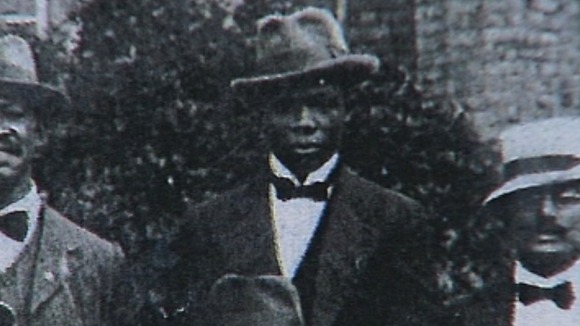
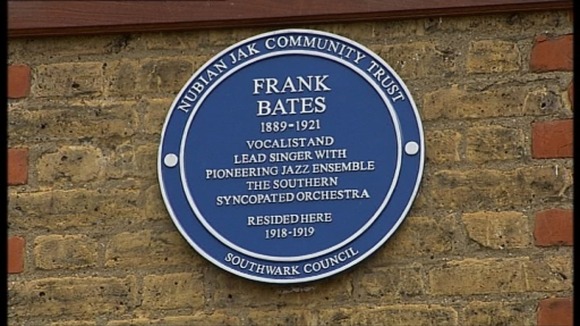
Last Sunday a plaque was unveiled in Southwark in memory of one of Britain’s earliest black jazz musicians Frank Bates.
Frank Bates was a singer in the Southern Syncopated Orchestra which performed in London clubs after the First World War.
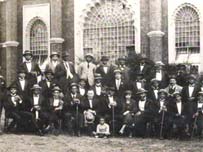
The Southern Syncopated Orchestra was formed by the American composer Will Marion Cook and comprised 27 musicians and 19 singers. The musicians came from, New Orleans, New York, Philadelphia, Guyana, Barbados, Antigua and Ghana among other places.
The Southern Syncopated Orchestra
The orchestra had made a deep impression across Europe. It had very quickly become a staple on the London club circuit. So taken were revellers by this new style of syncopated music and the extraordinary talents in its midst that it wasn’t long before the Prince of Wales (future King Edward VIII) had invited them to perform on the 19th August 1919 at Buckingham Palace.
Frank had lived in Hichisson Road in Peckham Rye where the plaque was unveiled.
Tragically Frank, and seven other members of the SSO, died in 1921 in a shipping disaster.
The Natural History Museum won the Best of the Best award at the Museums and Heritage Awards for Excellence 2013 ceremony last night.
Scott’s Last Expedition took the award for Best Temporary or Touring Exhibition, recognising the innovative approach it took to revealing the tales of endurance and scientific achievements of Robert Falcon Scott’s epic Terra Nova expedition.
The exhibition was a partnership with the Canterbury Museum in New Zealand, where it is currently open until 30 June, and with the Antarctic Heritage Trust.
When Scott embarked upon the Terra Nova expedition in 1910, he took with him two HMV “monarch” gramophones, donated by The Gramophone Company, which later became EMI, together with several hundred 78rpm discs, chosen to boost the team’s morale.
Scott’s gramophone was rescued and returned to the Gramophone Company – it is currently on loan from The EMI GROUP ARCHIVE TRUST as part of this major exhibition about the expedition.
The gramophone on which Scott and his men listened to music hall and opera at the bottom of the world.
If your interested in learning more about Captain Scott’s Gramophone check out the EMI Group Archive Trust website http://www.emiarchivetrust.org
Our regular commentator David Hughes tipped us off on this one:
Ah, hidden messages in HTML code, the hidden tracks of the internet. Various tweeters who, for some reason, can’t visit a website without checking in on the source code while they’re there, have spotted a cute little hidden addition to the code of the revamped HMV website, that went online as the flagging entertainment retailer emerged from administration last week. If Nipper can live on in the HMTL world, maybe HMV can survive in the digital era? Maybe.
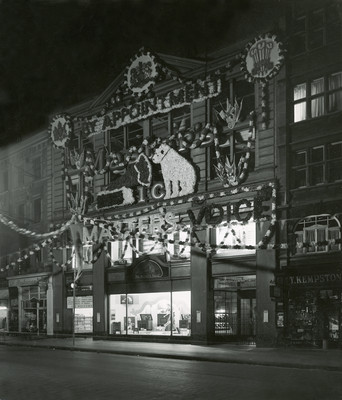
My previous blog on SOTH—Century of Spinning Plastic Discs—was an abstract musing on the nature of musical records as historical artefacts. It was originally written a few years ago, back when the great music emporiums—HMV, Virgin and Tower—still presided imperiously over the high street. Opening salvo of 2013: that abstract musing is turned into cold hard reality as HMV, the last surviving music-megastore, goes into administration.
There are as many explanations for HMV’s demise as there are pundits: it’s because of online piracy or online shopping or the internet in general or online taxation (or lack of it); it’s due to competition from other media formats such as video games; it’s supermarkets killing the catalogue market by cherry picking the top 20 and flogging it as a cheap loss-leader; it was simply bad management, they didn’t keep up with the times; it’s the X-Factor factor, that music is now just a ubiquitous commodity; it’s because the kiddies don’t care so much about music and the oldies have replaced everything their nostalgia cares about; it’s because music is overpriced and simply aint what it used to be; it’s because the high street is dying and HMV is just another extinction victim like Comet, Jessops and Blockbuster; it’s because the world is going to hell in a hand carte and nobody really gives a damn anymore.
Indeed, it is all of these things and others too. No single one of them would have been sufficient to fell HMV, but collectively they were inexorable like gravity. Nothing could have saved the HMV megastore and I am frankly surprised it lasted as long as it did. The writing was on its poster plastered walls years ago. On the high street, profit is a ratio of revenue to cubic space and, to those who count the beans, every cubic foot of stuff has to generate X amount of money; and if it does not, then other stuff must take its place. When one objectively considers the huge expanses of space in music-megastores, it is easy to see how the precipitous decline in footfall over the past years rendered the grand music emporium model unsustainable. An early clue that something was amiss revealed itself to me a number of years ago when B and I went into the small HMV in Hampstead and actually had to ask where the CD section was now located. No kidding, the CD section was that small.
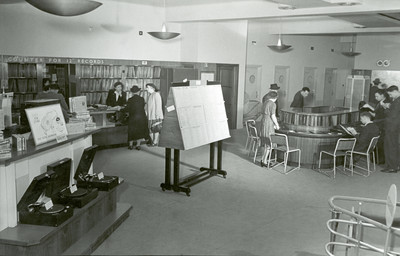
In their heyday the music-megastores were a real experience, an adventure. B and I looked forward to our regular Saturday trip downtown to visit them. There was a chaotic energy, a frenetic hustle-bustle from literally thousands of music hunters who packed the aisles so densely you could barely move. The entrance was a portal built of the latest chart hits which you passed through to enter the inner sanctum of Rock & Pop which positively buzzed with excitement. Jazz and Classical were sequestered in separate rooms to provide a sanctuary for the aficionados who required a more refined ambiance, away from the raucous hubbub outside their doors. There was always something there for us, we never left empty handed and more often than not, walked out with a half dozen or more CDs. That was at the beginning of the 21st century. In the whole of 2012 we visited the HMV megastore only once, easily navigating the empty CD aisles and struggling to find something—anything— we actually wanted at a price we were willing to pay.
After the announcement, B and I visited the Oxford Street HMV with the explicit purpose of seeing what bargains might be had under the circumstances. The atmosphere was grim. Customers roamed listlessly around. The staff put a brave face on it but the sense of sadness and demoralisation was palpable. Nonetheless, they worked as though it still mattered. In fact, one salesman took great pains to escort me around the various sections—Rock & Pop, Blues, Rock ‘n’ Roll—in search of Johnny Winter. Here was a knowledgeable salesperson actually helping me to find what I was looking for. Just like the old days. He was determined to prove that HMV still had that Mojo. Sadly, the search was in vain: no Johnny Winter anywhere. HMV had failed us both and the look on his face made me feel I had tortured him with some strange form of ritual humiliation.
Far from its past grandeur the shop felt tatty and depressing. Half the racks in the Jazz and Classical rooms were completely empty. The main aisle leading from the entrance, once crammed with customers, now featured large cardboard boxes filled with used CDs, spines up, languishing in no particular order, presented with all the dignity of a car boot sale. The new stock wasn’t much better. Artist dividers were packed inches thick because there were no CDs of those artists there to separate them. I turned down the album by Mountain selling at £19.95 because I knew I could get it, re-mastered along with 4 other Mountain albums on the Net for £11.99. What hope did HMV ever have? B and I felt like parasites, vultures pecking at a carcass and, in spite of the 25% sale, we walked out with nothing.
The fate of HMV—and other high street shops like it— is not the fault of external forces or sinister conspiracies. We could have an entertaining debate over a pint as to the relative impact that any particular factor had to play in this tragedy but, ultimately, I think we have only ourselves to blame. We may cry in our beer over the loss of these cultural institutions along with the vanishing high street they enriched, but we voted with our feet—or our mouse finger—and abandoned them to their fate. We got what we asked for: convenience. We shall get more of it too, much more of it. I hope we shall all enjoy the convenience we will all be getting. As far as shopping for music is concerned, we have made our decision and traded the excitement of the music emporium for convenient shopping. As Pink Floyd might have put it, we traded our heroes for ghosts.
HMV was the first of the great music emporiums and will soon be the last. There’s part of me that feels very sad for the younger generation who won’t experience something that I enjoyed so much. But they have other experiences they prefer, feel no loss whatsoever and will probably agree that I’m very sad. It lasted almost a hundred years. That was a hell of a run, actually. However, for better or worse, both time and culture have moved on. Perhaps some day, HMV may be resurrected in some diminished form, but the days of the great music emporium are now over. Goodbye HMV. Thanks for the excitement.



![$(KGrHqZ,!rQE-ZKL,-eGBPoKBVlNmQ~~60_35[1]](https://soundofthehound.com/wp-content/uploads/2012/05/kgrhqzrqe-zkl-egbpokbvlnmq60_351.jpg)
 Sound Of The Hound