Setting up a record company #5: Perfecting the gramophone

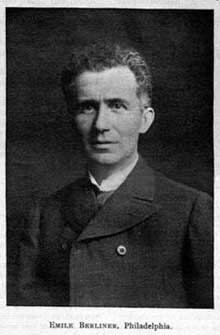
This week we plan to tell the story of how Emile Berliner and Fred Gaisberg set up their record company in America. Seven blog entries on seven days. This is day #5. Its 1895. Whilst Berliner is perfecting the shellac disc and Fred Gaisberg is on the road raising money for the new gramophone business, Gaisberg can’t escape the fact that a major problem with the gramophone is that it remains 100% manually operated unlike the new cylinder playing phonograph (that Thomas Edison’s company had just released) which has a clockwork driven motor that makes the playback level consistent. Berliner’s gramophone discs may sound better than Edison’s cylinders but the gramophone itself still requires the steady hand of a decent operator to play properly.

Gaisberg later recalled, “My equipment was the simple hand-driven 7-inch turntable. As it was without a governor I had to rotate it with cool nerves and a steady notion, or the music would play out of tune.”

Whilst he was pitching the gramophone to the Philadelphian businessmen who would later fund the gramophone business, Gaisberg spotted an ad in a local paper that read “Why wear yourself out treading a sewing-machine? Fit one of our clockwork motors.” Fred saw that such a device might solve the problem with the gramophone. He began a search for somebody to build a clockwork motor that would take the gramophone to the next level. That search led him to the door of a young mechanic called Eldridge Johnson who worked in Camden, New Jersey who he introduced to Berliner.
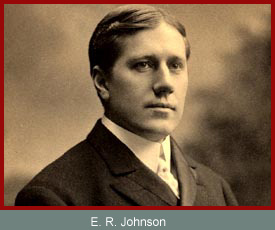
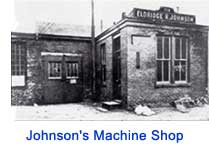
Fred later recalled “I can see him now as he was when I went to that little shop across the river…tall, lanky, stooping and taciturn, deliberate in his movements and always assuming a low voice with a Down-East Yankee drawl…
His quick, inventive brain saw what [we were] trying to do. On his own account he built and submitted to our directors a clockwork gramophone motor which was simple, practical and cheap. It was the answer to our prayers and brought Johnson an order for two hundred motors.”

It would begin a long and prosperous relationship between Berliner and Johnson and they would go on to form the Victor Talking Machine Company, one of the recording giants of the first half of the twentieth century.
Setting up a record company #4: Making better records

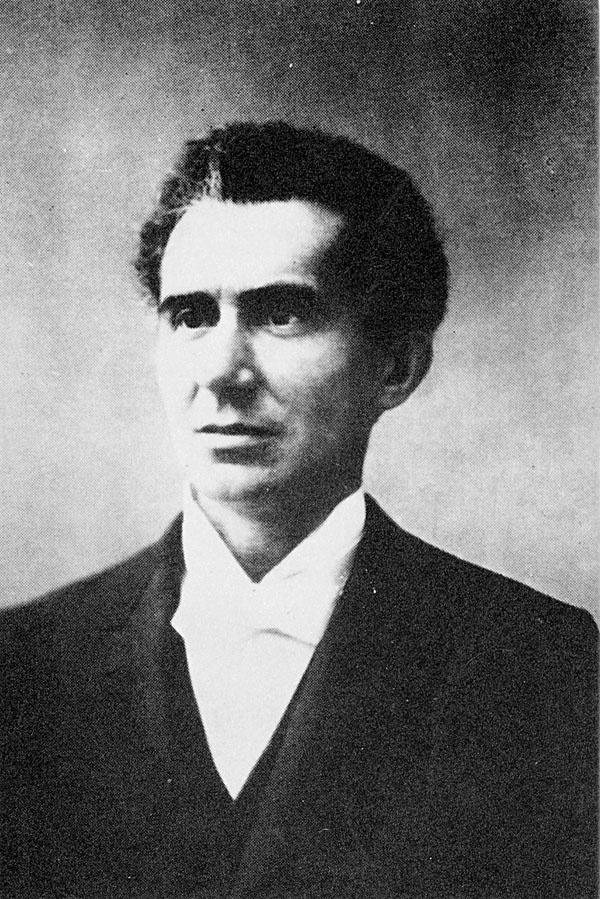
This week we plan to tell the story of how Emile Berliner and Fred Gaisberg set up their record company in America. Seven blog entries on seven days. This is day #4. We’ve reached 1895 and whilst Gaisberg and Karns are on the road trying to find investors for the new gramophone business, Emile Berliner is busy improving the quality of the new-fangled recording discs.

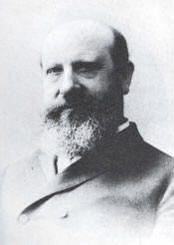
The great inventor Emile Berliner gazing into the distance. Thinking of discs.

Gaisberg later recalled how Berliner worked on the discs. “Berliner had been using “ebonite” or vulcanised rubber for pressing records. Ebonite required a great deal of pressure and would not retain the impression permanently. Pondering over this, he remembered that the Bell Telephone Company had abandoned vulcanised rubber and adopted a plastic for their telephone receivers.

The Durinoid Company of Newark NJ were button manufacturers who undertook to furnish pressings of a similar substance from the matrices supplied by Berliner. The new substance was a mixture of powdered shellac and byritis, bound with cotton flock and coloured with lamp black. It was rolled under hot calenders into “biscuits”. when heated these “biscuits” were easily moulded under pressure and when cooled they retained the impression.

I was present when Berliner received the first package of gramophone records from the Durinoid company. With trembling hands he placed the new disc on the reproducer, and sounds of undreamed quality issues from the record. It was evident that the new plastic material …had under pressure poured into every crevice of the sound track bringing out tones hitherto mute to us. Berliner shouted with excitement, and all of us including the venerable Werner Suess, our seventy eight year old mechanical genius…danced with joy around the machine.”

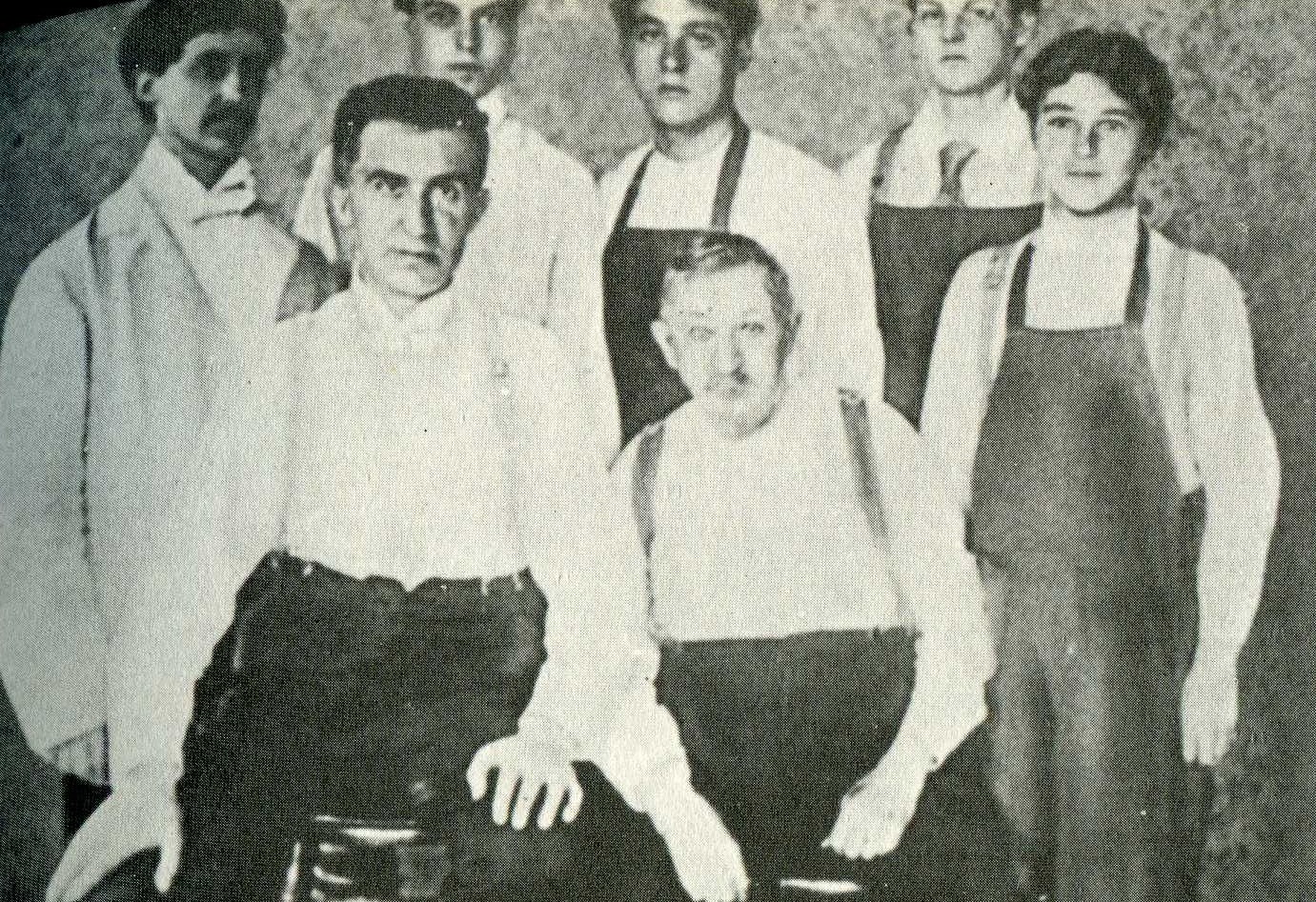
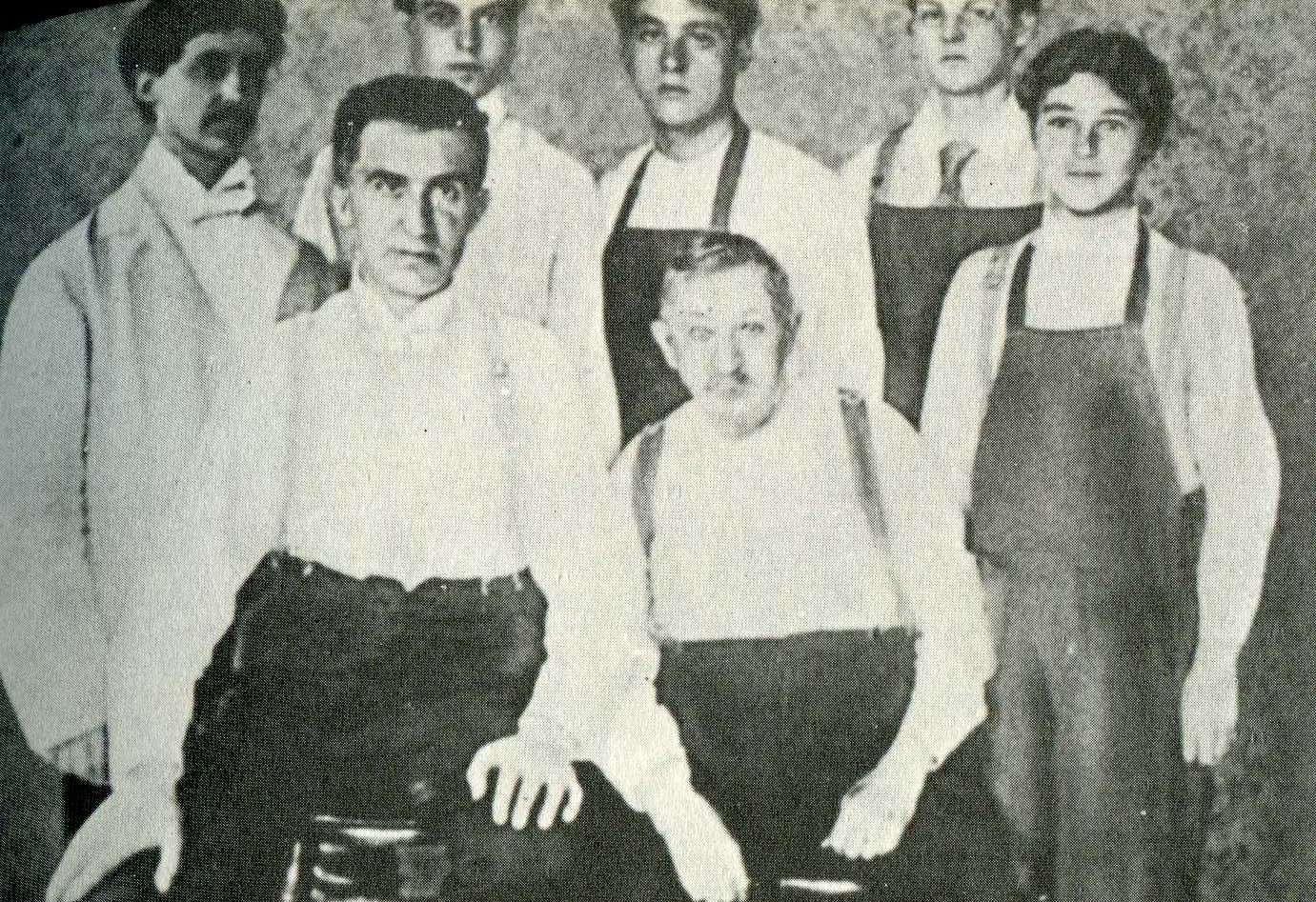
Berliner's team. A strange looking crew, particularly Gaisberg standing on the left, Berliner front left and Werner Suess front right, eighty-five years old and keen on dancing.

According to Gramophone Magazine “Shellac continued to be the basis of all gramophone records for nearly 50 years (until vinyl records appeared during the 1939-45 war) except for such odd novelties as edible ‘chocolate’, and celluloid faced postcards. Record diameters increased from a tiny 125mm (5 inches) through 175mm (7 inches) to the eventual 250 and 300mm (10- and 12-inch) standards, giving playing times of 1, 2, 3 and 4-1 minutes respectively. Double-sided records came in at the turn of the century.”

Setting up a record company #3: Raising finance

This week we plan to tell the story of how Emile Berliner and Fred Gaisberg set up their record company in America. Seven blog entries on seven days. This is day #3. Its 1894. Berliner has developed the gramophone to a degree that it’s ready for market. Fred is on board to make demo recordings to show investors the potential of the new medium.

Money...it's a drag.

Berliner was not finding it easy to raise the money he needed to grow his gramophone business. Fred Gaisberg recalled that “a stream of punters and speculators, rich and poor, visited Berliner’s small laboratory. They were all amused and interested but sceptical. They would not part with their money and Berliner’s funds and courage were getting lower and lower…He often confided to me that something would have to be done or he would be forced to close down. I had been weeks without my modest salary, but as I was earning money with my piano playing in the evenings this was no great hardship for me.”

Fred decided to try to help and persuaded an establishment figure friend of his, one B.F. Karns, to help him try to raise money for Berliner. Karns proved less substantial than he appeared and in the first instance Fred ended up lending him money….

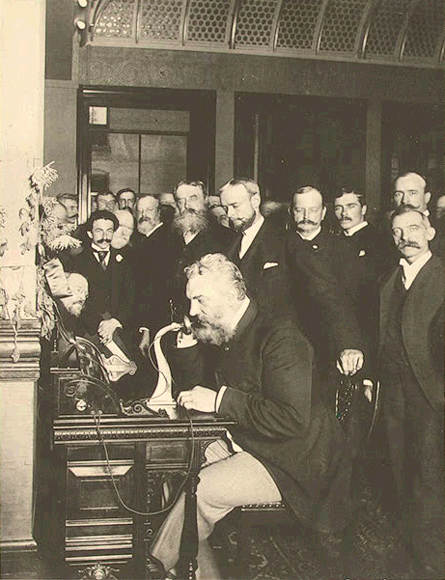
Karns did however get them in front of some movers and shakers including the Directors of newly established and prospering Bell Telephone Company “oozing opulence and exhaling fragrant Havana cigars” but despite being tickled by the gramophone they showed no interest in backing the fledgeling record business.

Alexander Graham Bell of the Bell Telephone Company and some of his directors but with no cigars

Karns also got them to meet “Mr (FAO) Schwarz, the greatest toy maker in America, who ….asked for a talking doll.”

FAO Schwarz. He wanted talking dolls.

Gaisberg and Karns spent much of the winter of 1894 and 1895 on the road trying to raise money. Karns talked money, Fred demo’d the gramophone. But by March all the money was gone. They found themselves stranded in New York by a blizzard “snowed up in a dollar a day hotel for one whole week and without funds and with all communications cut off. For food, we patronised the free-lunch counters when the bartender’s face was turned away. Altogether we spent a week of great discomfort.”

On the return to Washington they stopped off in the City of Brotherly Love and made one last pitch to a couple of Philadelphians. They were non-committal and Gaisberg and Karns proceeded back to Washington fed up and fundless.

As 1895 turned from spring to summer, the future of the Berliner gramophone looked bleak. Fred continued making what recordings he could and Berliner concentrated upon perfecting the technology. But as far as money was concerned, the cupboard was decidedly bare.

This last diversion to Philadelphia proved ulimately to have been worthwhile. By the end of the summer the Philadelphians had formed a syndicate of 5 (two steel jobbers, a clothing manufacturer and two building contractors) to pump $25,000 into a new company which was named The United States Gramophone Company.

Gaisberg and Berliner were out of the starting blocks.

Setting up a record company #2 Finding the right artists

This week we plan to tell the story of how Emile Berliner and Fred Gaisberg set up their record company in America. Seven blog entries on seven days. This is day #2.
Its 1893.Fred Gaisberg has joined Emile Berliner in his attempt to bring his new invention, the gramophone, to the market. It meant Fred leaving behind the Columbia Phonograph Company of Thomas Edison and working from Berliner’s lab at 1410 Pennsylvania Avenue in Washington.

Berliner's team at The United States Gramophone Company, front from left Berliner, Werner Suess. Back from left Gaisberg, William Sinkler Darby, Gloetzner, Joe Sanders, Zip Sanders.

This is a photograph of the early team who nurtured the gramophone project. Fred recalls the very early days when the team was just three people:

“Berliner did the recording, I scouted for artists, played the accompaniments, and washed up the acid tanks. Berliner’s nephew, Joe Sanders, made the matrices and pressed the samples.”

His artist’s were very varied and were selected to show off the potential of the new recording system. The first five were:
1) Billy Golden, who had introduced Gaisberg to Berliner. He sang “Turkey in de Straw”, a famous “negro” song.

2) O’Farrell an Irish comedian who recorded “Down Went Mcginty to the Bottom of the Sea.”
3) George W Graham who was a member of Indian Medicine Troupe who sold quack medicines at street corners and entertained the crowds accompanied by John O’Terrell on banjo. George recorded “his famous talk on ‘Liver Cure'”
4) Donovan, a train announcer, who recodrded nursery rhymes
5) Emile Berliner singing “Twinkle Twinkle Little Star” and reciting the Lord’s Prayer.

No classical artists at this point, but from this initial selection of five recordings sprang the great recording catalogues of today.

Setting up a record company: #1 Get the technology right

When William Barry Owen and Trevor Williams shook hands to establish the UK’s first record company, The Gramophone Company, in 1897 they sent for Fred Gaisberg, an American “recording expert” to come over to England to help them by setting up the recording department and the UK’s first recording studios in Maiden Lane.

Fred’s involvement in the American parent company, The United States Gramophone Company, went back much longer – to its very inception. We plan to tell the story of how that record company came into being in seven blog entries over the next seven days….

You might remember from an earlier blog entry that Fred had been working for Thomas Edison’s Columbia Phonograph Company before meeting the eccentric inventor, Emile Berliner. Berliner had worked out how to record on flat discs that were a marked improvement on the cylinders being used by Edison. He called his playback device the gramophone. Fred asked Berliner for a job when he felt he was was ready to take the new invention to market.

Later in 1893 Fred recalls that he “received a postcard asking me to come and see him [Berliner]. In great anticipation I called at his house. he informed me that in recent months his laboratory experiments had culminated in the production of a recording and reproducing process sufficiently advanced to place on the market. He also confided to me that three of his relatives and friends had formed a small syndicate to exploit his gramophone. With the limited funds he wanted to make a small programme of songs and music for demonstration purposes in order to raise capital for promoting a company. He told me I was just the person he was looking for….My value to Berliner rested in the fact that I could collect quickly a variety of effective talent to make these demonstration records.”

Fred of course said yes to Berliner’s offer and they switched into business start up mode. Over the next six days we plan to highlight some of the key moments in the setting up of what would become the record business. All the great recordings from Sinatra to The Beatles to Lady Gaga can be traced back to the events of the next few years. 1893 to 1897 saw the invention of recording sound become a business.

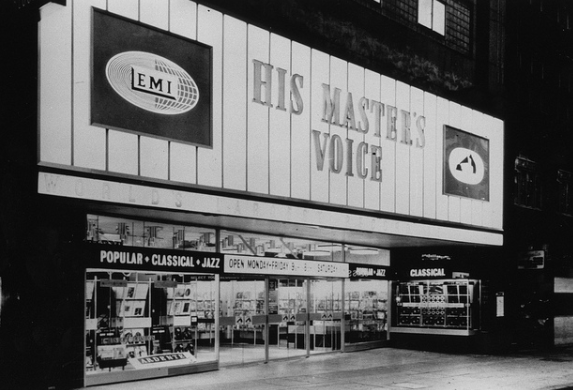
HMV 363 Oxford Street

This was the Daddio of record shops. HMV 363 Oxford Street, London in the late 1950’s:

The shop plays a part in The Beatles story. HMV, which was then part of EMI, had a small recording studio that members of the public could record songs for their sweethearts. In February 1962 Brian Epstein was in London doing the rounds of the London record companies trying (unsuccessfully) to get a record deal for the boys. He stopped at HMV Records at 363 Oxford Street to get some acetate discs made from the (unsuccessful) reel-to-reel Decca demo. The disc-cutter was Jim Foy who mentioned the group to publisher Sid Colman who in turn mentioned them to George Martin at E.M.I.’s studios in Abbey Road NW8. George gave The Beatles a recording test some months later and the rest is history.

People also bought music there!

You can browse more wonderful photos from HMV in the 1960’s here

The original HMV shop burnt down in 1937 to be rebuilt and reopened 2 years later on 8th May 1939. Sir Thomas Beecham, the famous conductor, opened the store. Here is his speech and photos of the fire.

The original shop was opened in 1921 by Sir Edward Elgar (who also opened Abbey Road Studios ten years later)

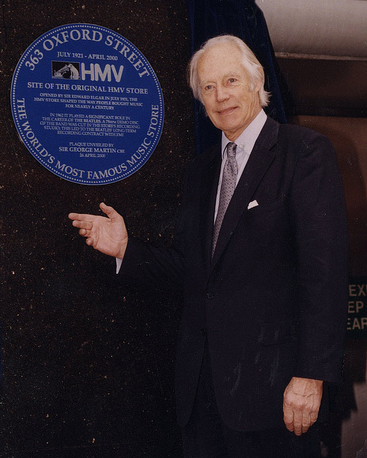
The shop closed down on April 2000. A certain George Martin was there to send it on its way with a Blue Plaque.

Publicity photos of the early Gramophone stars #2 Albert and ‘is old Dutch

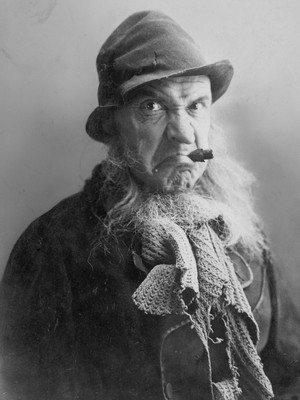
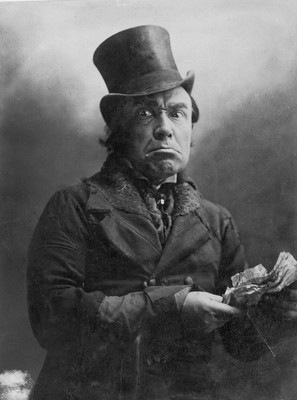
This is the second in a series of publicity shots from the early years of the recording business that our friends at the EMI Archive Trust have made available to us. These two photos are of Abert Chevalier who was a comedian, actor and music hall star at the turn of the last century. He is clearly throwing himself into the world of PR – much more so than opera stars Gluck & Homer in our previous photo.

Chevalier’s most famous act was as a singing Cockney costermonger (or market trader; which must be the top photo) and biggest hit was My Old Dutch which was a sentimental tune about a man’s love for his wife ( its Cockney rhyming slang: Dutch = Duchess of Fife = wife). It was written in 1892 and already hugely popular when Fred Gaisberg recorded Chevalier singing it at the Maiden Lane studios in 1899. The tune was a hit both in the UK and US and went on to two spawn two films of the same name, the first starring Chevalier in 1915. His full name has to be mentioned; he was born Albert Onesime Britannicus Gwathveoyd Louis Chevalier. We are going to give Mr C 4/5 for his photo pose but will award him an extra half a mark for that collection of forenames. So, final PR score for effort in a publicity photo = 4.5/5. Great score.

If you have been affected by any of the content included in this post please dont hesitate to get in touch with The EMI Archive Trust who will be happy to talk to you about this picture and the rest of their wonderful collection.

“No place for a woman in a recording studio”. Delia Derbyshire denied by Decca invents (soundtrack to) time travel.

There are not that many prominent women in the history of recorded sound. Indeed there are not that many women working in recording studios even today. Boffins and creatives have tended to have the odd Y chromosone or two. The recording studio can be like a gang hut. A step from Lord of the Flies in one direction and a hop and a skip from a soldering iron in the other. Not a place for a lady then….at least that was what the head of Decca Recording Studios in London thought in the late 1950’s. When recording enthusiast Delia Derbyshire applied for a job, she was told unequivocably that Decca did not employ women in their recording studios. (An executive from Decca Records would also famously turn down The Beatles a couple of years later as they thought guitar bands were on the way out…..)

Like The Beatles, Delia was not one to be put off easily. She landed herself a job at the BBC Radiophonic Workshop in 1962 and went on to create some of the most experimental music of the 1960’s and in doing so turned the recording studio itself into a star. The workshop is best known for having created the most famous theme music on British TV, Doctor Who. But there was way more to its story and that of Delia Derbyshire, one of its central characters.

In 1966, she founded a music entity/pop group called Unit Delta Plus with fellow Radiophonic Workshop member Brian Hodgson and EMS founder Peter Zinovieff. This organisation pre-dated the British Electrical Foundation by 15 years and Kraftwerk by 4 years and was a vehicle to create and promote electronic music. They played at The Million Volt Light and Sound Rave at which The Beatles’ “Carnival of Light” had its only public performance in 1967. Delia also helped set up the Kaleidophon studio in Camden Town with Hodson and fellow electronic musician David Vorhaus. The studio produced electronic music for various London theatres and, in 1968, the three founders made an album as the band White Noise.

Here is part one of an excellent radio documentary about Delia with appropriate images (you can find the other parts on youtube)

And here is a fascinating snippet of Delia playing the tape machines:

And finally here is Electric Storm by White Noise.

We’ve been adding some new photos to our Recording Studios section: Dylan, Ziggy, U2, Joe Meek, Floyd

Hover your cursor over the Recording Studios item on the menu strip (above) and choose a Studio to go to. Currently showing Joe Meek in 1961, Bob Dylan in Columbia Records Studio A in 1963, Abbey Road Studio 3 in 1973 at the time of Pink Floyd’s Dark Side of The Moon, Trident Studios, where David Bowie recorded Ziggy Stardust, in the 1970’s and Olympic Studios in 2008 with U2 recording the last session before the studios sadly close.