Memories of EMI Campaign

The EMI Archive Trust is delighted to introduce our new ‘Memories of EMI Campaign’.

We believe that the strong legacy of EMI is a testament to the people who worked for the company across the years and The Trust would like to celebrate those employees.
We’d love to hear from previous employees to learn about their stories of what life was like working for EMI. Find out more on how to get involved here.

Nipper 1884 – 1895

Name:            Nipper

Born:              1884

Resident:        London

Occupation:   Posing for paintings, attacking Gramophones, looking for His   Masters Voice

Loves:              Being a world famous icon, treats

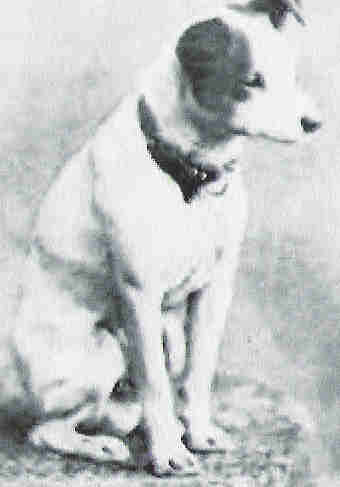
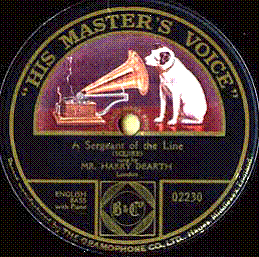
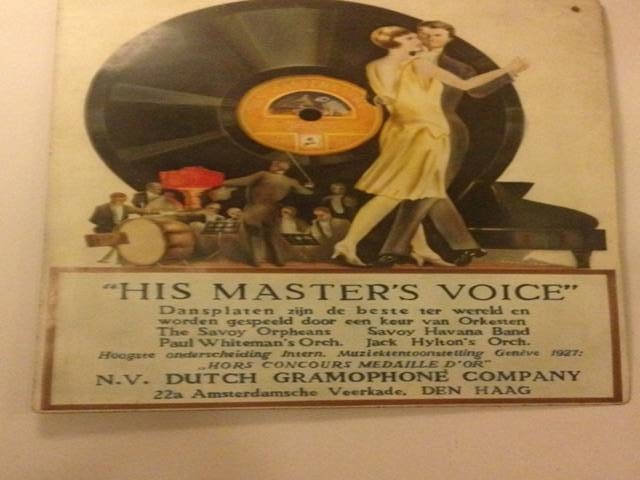
Francis Barraud’s painting of a fox terrier to an early gramophone remains one of the oldest and best-known of trademarks and records logos. It was a brilliantly conceived piece of commercial art that has become one of the worlds most recognised trade marks.

Courtesy of  EMI Group Archive Trust
Courtesy of EMI Group Archive Trust

Nipper was a stray dog found by Mark Barraud (Francis Barraud’s brother) in 1884. He was called Nipper because he a habit of nipping at the back legs of any visitors. Nipper became Francis’ pet three years later when Mark died.  The iconic ‘His Master’s Voice’ painting was made some time before 1899, although in the original Nipper was listening to an Edison phonograph.

On May 31, 1899, Barraud went to the Maiden Lane offices of The Gramophone Company with the intention of borrowing a brass horn to replace the original black horn on the painting. Manager William Barry Owen suggested that if the artist replaced the machine with a Berliner disc gramophone the Company would buy the painting.  Since then Nipper has been the face of a huge global brand the ‘His Master’s Voice’ painting is one of the most recognised trademarks in the world.

Courtesy of  EMI Group Archive Trust
Courtesy of EMI Group Archive Trust

Gaisberg’s Travels

Thursday, 21 September 1899 [Dublin]

A very disappointing day from a record-making standpoint.

Miss [Maud] Boyd did not appear during the day, but on going to dinner that evening I discovered the whole crowd of them in the dining room.

Courtesy of V & A
Courtesy of V & A

When they arose to go, I followed them and reminded them of their promise, and after a good lot of coaxing they followed me over.

Miss Boyd proved a charming lady with a grand, big voice. She sang “The Golden Isle” from “The Greek Slave“, and a sweet girl, Mrs. Medlicot, played her accompaniment.

         Extract from Gaisberg’s Diaries.

Miss Maud Boyd was a prominent pantomime singer at the time. She did only a small number of recordings for the Gramophone Company but they did release her rendition of “The Golden Isle.”


Recording Pioneers- Part 5

Francis Barraud 1856 – 1924

“The whole world saw it and succumbed to its charm”

-Alfred Clark comments on the painting

Name:                   Francis Barraud

Born:                    June 16, 1856

Resident:             Born in London

Occupation:         Artist, Painter, stray dog lover

Loves:                 Painting, animals

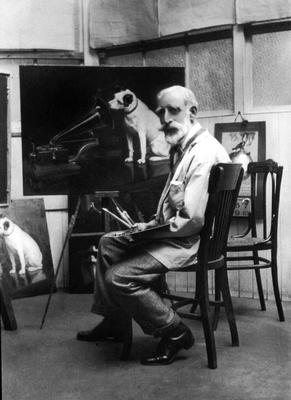
Francis James Barraud was born into a family of artists in London. He studied art at the Royal Academy School and in Antwerp. An accomplished technician, he was a frequent exhibitor at the Royal Academy and else where. One of his early works An encore Too Many is displayed in the Liverpool Walker Art Gallery, and the painting His Master’s Voice brought him world wide fame.

Francis Barraud, in his studio. ©  Courtesy of  EMI Group Archive Trust
Francis Barraud, in his studio.
© Courtesy of EMI Group Archive Trust

Barraud was never to recapture that success, however and by 1913 he was in financial straits. When he learned of this situation Alfred Clark commissioned Barraud to paint a copy of His Master’s Voice for the Victor Company. Thereafter, Barraud painted a total of 24 copies of his most famous work. In recognition of these services, the Gramophone and Victor Companies paid Barraud a pension. His Master’s Voice remains one of the world’s best-known trademarks.

Mystery Object # answer 4

Our last posting must have been a bit too easy for our regulars hound contributors, but for those still biting at the bit  here is the answer ….

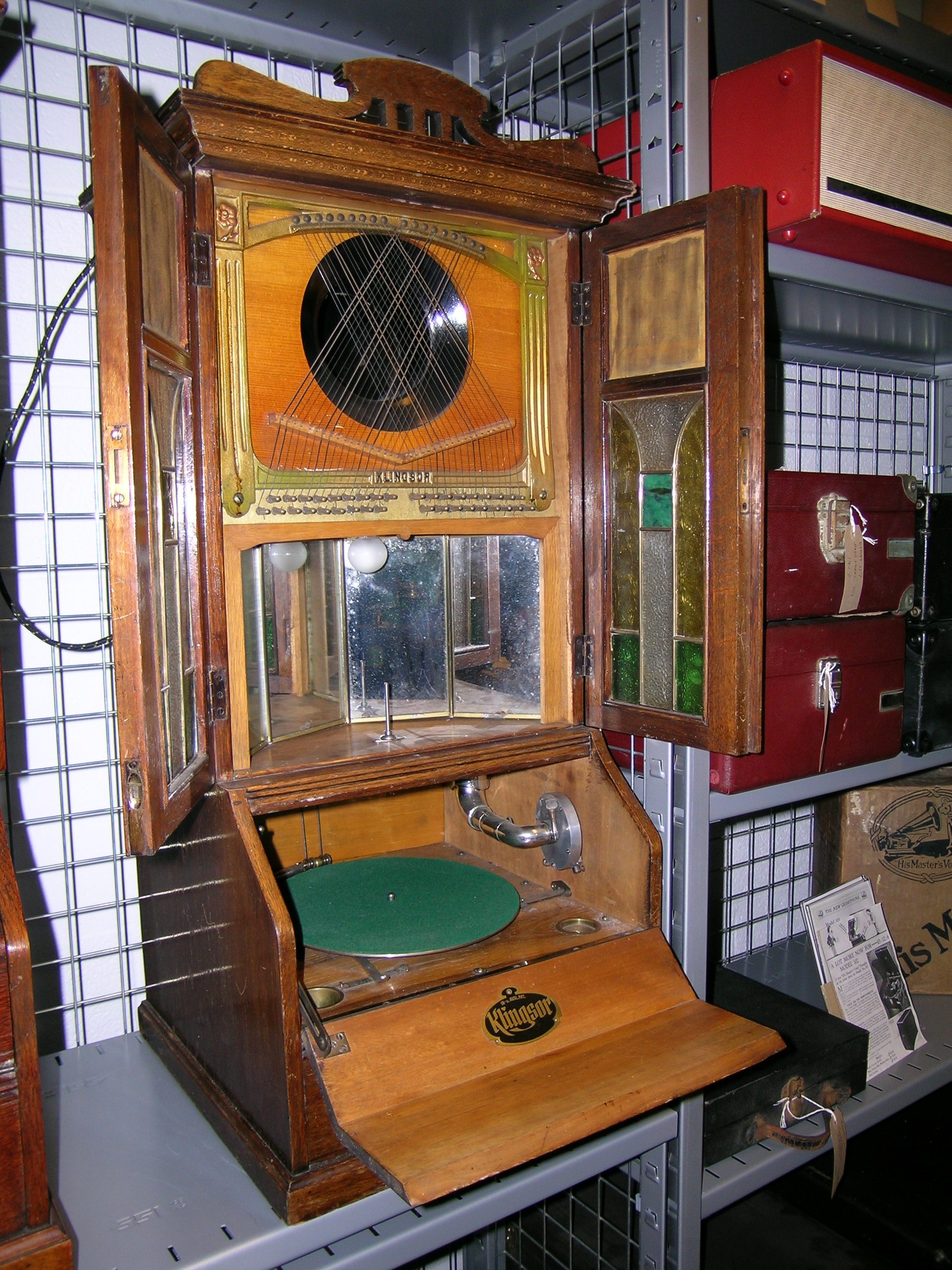
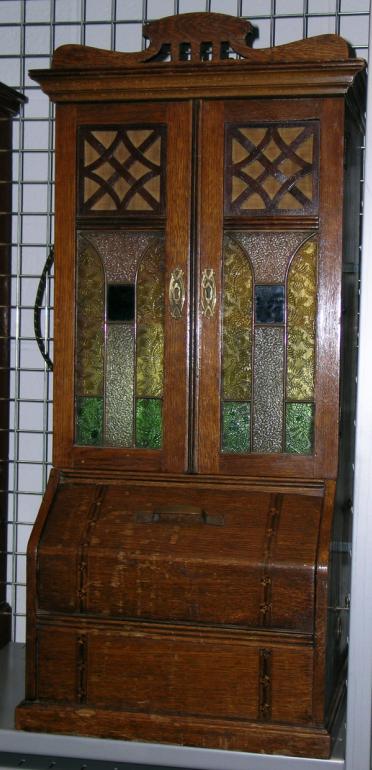
The Klingsor Gramophone, Krefeld and Polyphon. 1910 Courtesy of  EMI Group Archive Trust
The Klingsor Gramophone, Krefeld and Polyphon. 1910
Courtesy of EMI Group Archive Trust

The Klingsor Gramophone was invented in Germany in 1907, and featured a group of strings stretched across the horn opening which resonated as the sound was emitted. There many styles and sizes available, including coin-op and ones with dancing figures in the recess below the horn. They were sold in the UK through Murdoch, who was still offering machines in the 1920’s.

Back to school

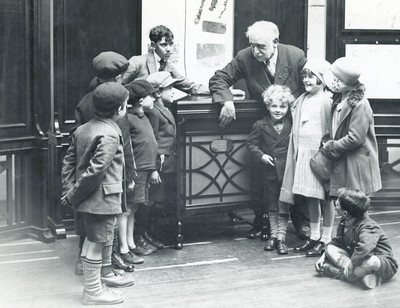
George Lansbury, (22 February 1859 – 7 May 1940) was a British politician and social reformer who led the Labour Party from 1932 to 1935.  Education for the poor was one of Lansbury’s major concerns.  Lansbury  paved the way for the Attlee Government to ensure provisions of the Education Act 1944 were fully implemented, with free secondary education becoming a right for the first time!

Installation of an Electric Gramophone at The Science Museum, South Kensington, with the MP George Lansbury in May 1931 Copyright courtesy of  EMI Group Archive Trust
Installation of an Electric Gramophone at The Science Museum, South Kensington, with the MP George Lansbury in May 1931
Copyright courtesy of EMI Group Archive Trust

I HAVE A DREAM

  Dr Martin Luther King’s I have a dream speech 50th anniversary

Fifty years ago today Martin Luther King gave his iconic I have a dream speech at the height of the American civil rights movement. The movement worked hard to bring about equal rights for black people living in the United States and globally.

The Gramophone Company had a long history of including music from world cultures in its repertoire beginning with taking early recordings of music from black communities descended from slaves in the United States, classical Indian musicians, Native American’s, South American, West African musicians as well as what is now considered western music from Europe and North America.  As such it is no surprise that EMI became the proud owners of the copyright of the speech in 2009 in a deal with the King family.