Recording Pioneers- Part 2

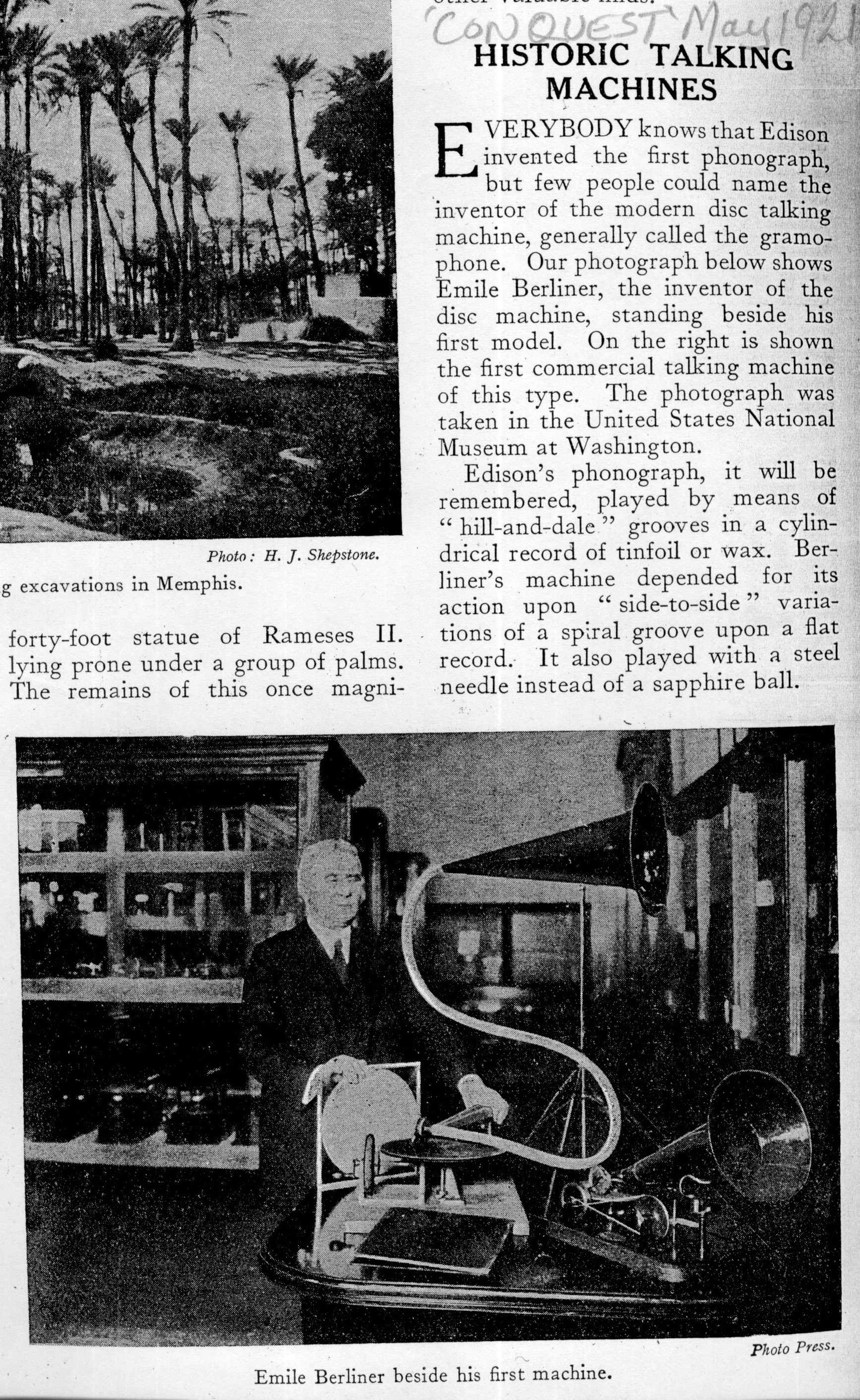
Alfred Clark 1873 – 1950


“The fine thread running through the very fabric of HMV history”

-Fred Gaisberg

Name:                  Alfred Clark

Born:                    19 December 1873

Resident:             Born in New York,  moved to France 1899 aged 26  then resident of the UK, 1909 -1950

Occupation:        Gramophone Company Managing Director, Chairman and EMI President

Loves:                  Classical music, sealing the deal, travelling the world
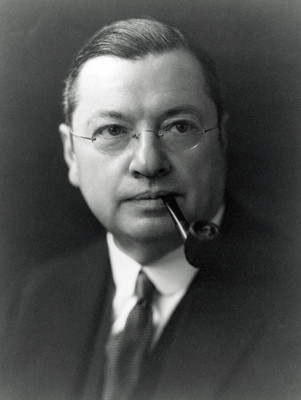
 

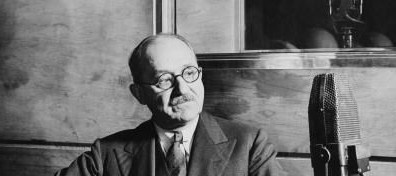
Alfred Clark Copyright courtesy of  EMI Group Archive Trust
Alfred Clark
Copyright courtesy of EMI Group Archive Trust


Clark was born into an affluent New York family. He began his career in the newly forming recording industry with North American Phonograph in 1889, at the age of just 16. Throughout the 1890’s he also worked for Thomas Edison’s Kinetoscope organisation, where he produced ‘Mary, Queen of Scots’ – Edison’s first scripted film.

“Clark had all the vision of youthful enthusiasm and it was not long before he had enticed to his recording studio the great stars of the Opera and concert halls…”

-Fred Gaisberg meeting Clark in Paris


He later went to join Emile Berliner as a sales manager at the Berliner Gramophone Company store in Philadelphia.  Around this time he also became involved in experimental work, redesigning and patenting a new design for the gramophone sound box with Eldridge Johnson.
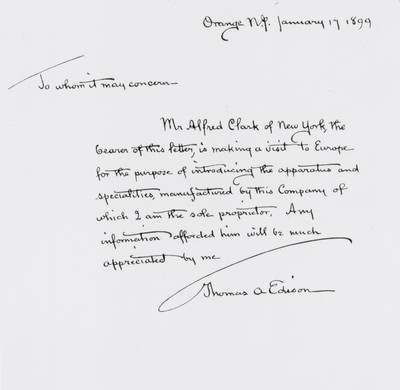
Thomas Edison letter Alfred Clark Copyright courtesy of  EMI Group Archive Trust
Alfred Clark letter of introduction from Thomas Edison

In 1899 at the age of just 26 Clark immigrated to France as an agent for Thomas Edison and Emile Berliner.  He joined forces with the Gramophone Company to form ‘Compagnie Française du Gramophone.’  He remained here until 1908 and after one year’s short break he became the Managing Director of the Gramophone Company in 1909.  He stayed in this post for 21 years until 1930, when he became The Gramophone Company’s Chairman.
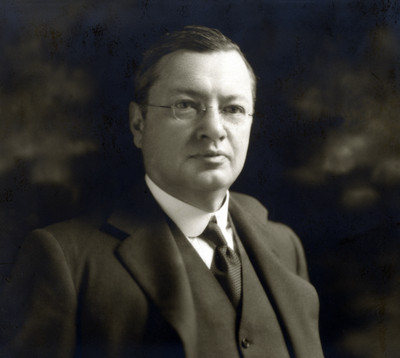
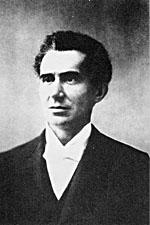
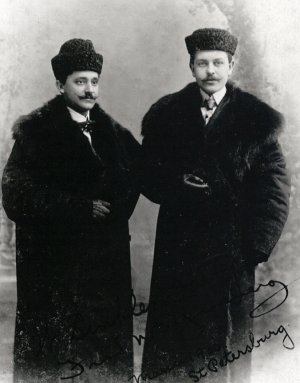
Alfred Clark Copyright courtesy of  EMI Group Archive Trust
Alfred Clark
Copyright courtesy of EMI Group Archive Trust


He played a central part in the negotiations that led to the formation of Electric and Musical Industries Ltd (EMI Ltd) of which he was the first chairman. In 1946 he became EMI President. He stayed in this post for only 6 months before deciding to leave the company. Despite his incredible success Clark took a humble view of his career.


“…it has been a drab, plugging career, nothing spectacular, a business of laying one brick upon another…”

-Alfred Clark
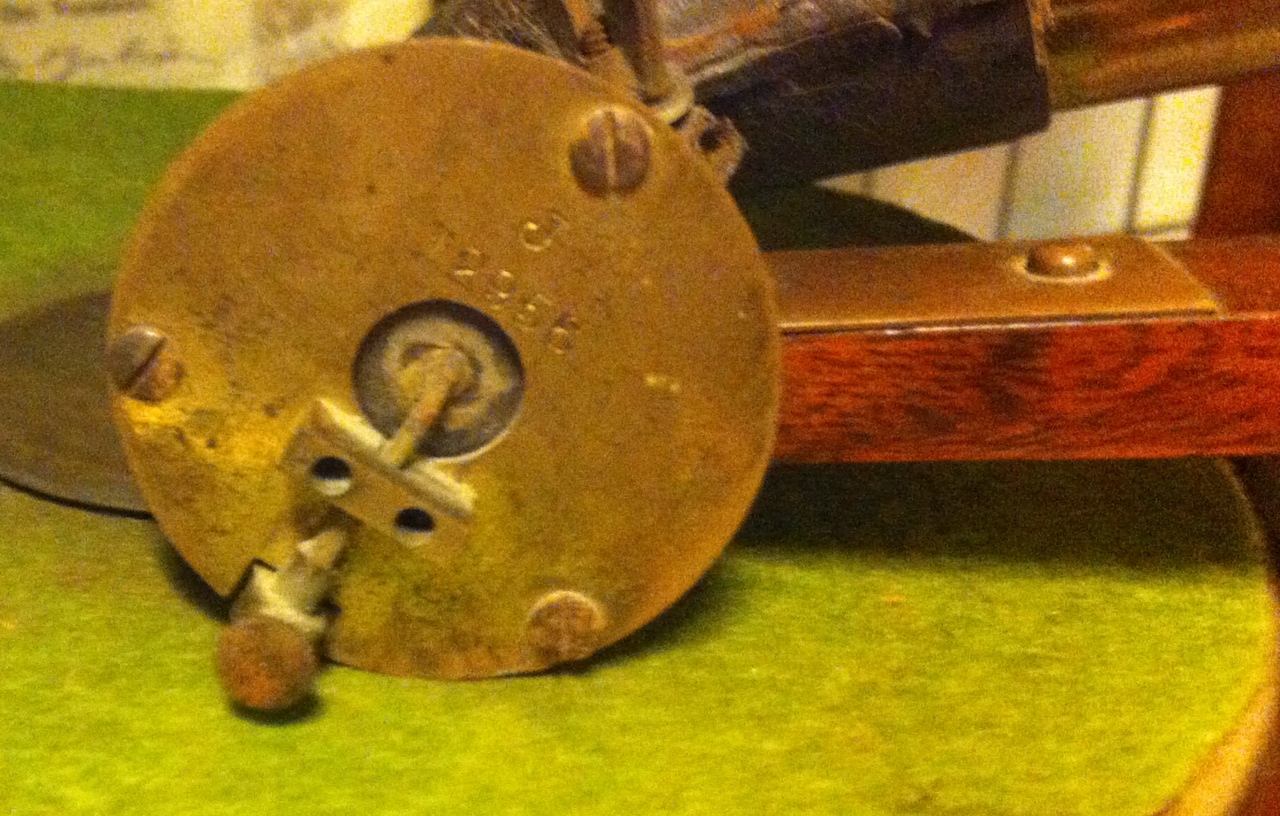
Friday mystery object #1

The Hound gets to see some amazing stuff and often has to work out what it is.

So pop on your Deerstalker Hat and help us solve the first in the series of…………….

Fridays Mystery Object of the Week!

Mystery object No 1
Mystery object No 1

Put you thoughts in the comments section below, answer will follow next Thursday

Good luck!

Recording Pioneers- Part 1

Emile Berliner 1851 – 1921

“The key to victory is never-ending application”

-Emile Berliner

Name: Emile Berliner

Born: 20 May 1851

Resident: Born in Hanover in Germany, immigrated to the United States as a young man of only 19 in 1870

Occupation: Recording sound mastermind

Loves: His wife and family, inventing, campaigning for better health standards and shellac discs

Emile Berliner
Emile Berliner

Berliner applied himself to the science of sound and recording. On November 8 1887 he patented a successful system of sound recording. Berliner was the first inventor to make recordings on flat disks or records. Previously recordings were made onto cylinders. With Berliner’s new system a spiral groove with sound information was etched into the flat record.

Around the time of his invention Berliner met a young man called Fred Gaisberg. With a keen interest in the newly developing phonograph industry Gaisberg paid a visit to Berliner’s laboratory in Washington DC where he watched Berliner record Billy Golden onto a flat disc and then listened to the playback.

When Gaisberg first heard one of Berliner’s recordings he noted

“I was spell bound by the beautiful round tone of the flat gramophone disc”

-Fred Gaisberg

The superior sound and ease of mass reproducing recordings lead Berliner to set up the Gramophone Company in the United States. He later sent the young Fred Gaisberg to London to set up a recording studio to exploit the European market.

Emile Berliner & Hanover Factory - Germany Copyright: EMI Group Archive Trust
Emile Berliner & Hanover Factory – Germany
Copyright: EMI Group Archive Trust

Berliner has been described as an eccentric inventor and scientist but the intricacies of the business world never came naturally to him. The success of the Gramophone Company was due to his careful choice in business savvy partners, such as Gaisberg, who made the contacts and sales that pushed the company to be an industry leader. Gaisberg commented in his journals

“For many years Berliner was the only one of many people I knew connected with the gramophone who was genuinely musical and possessed a cultured taste.”

-Fred Gaisberg

For his achievements in the recording field Berliner was awarded the prestigious John Scott and Elliott Cresson medals by the Franklin institute. He remained a true scientist throughout his career. Both in public health by promoting the pasteurisation of milk thus reducing the rates of childhood infectious diseases and in the field of physics where he continued making developments in acoustic tiles, aeronautics and microphone technology.

Gaisberg’s Travels

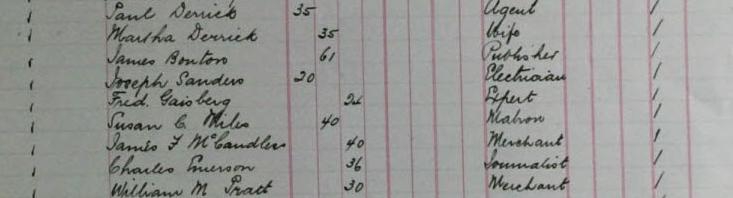
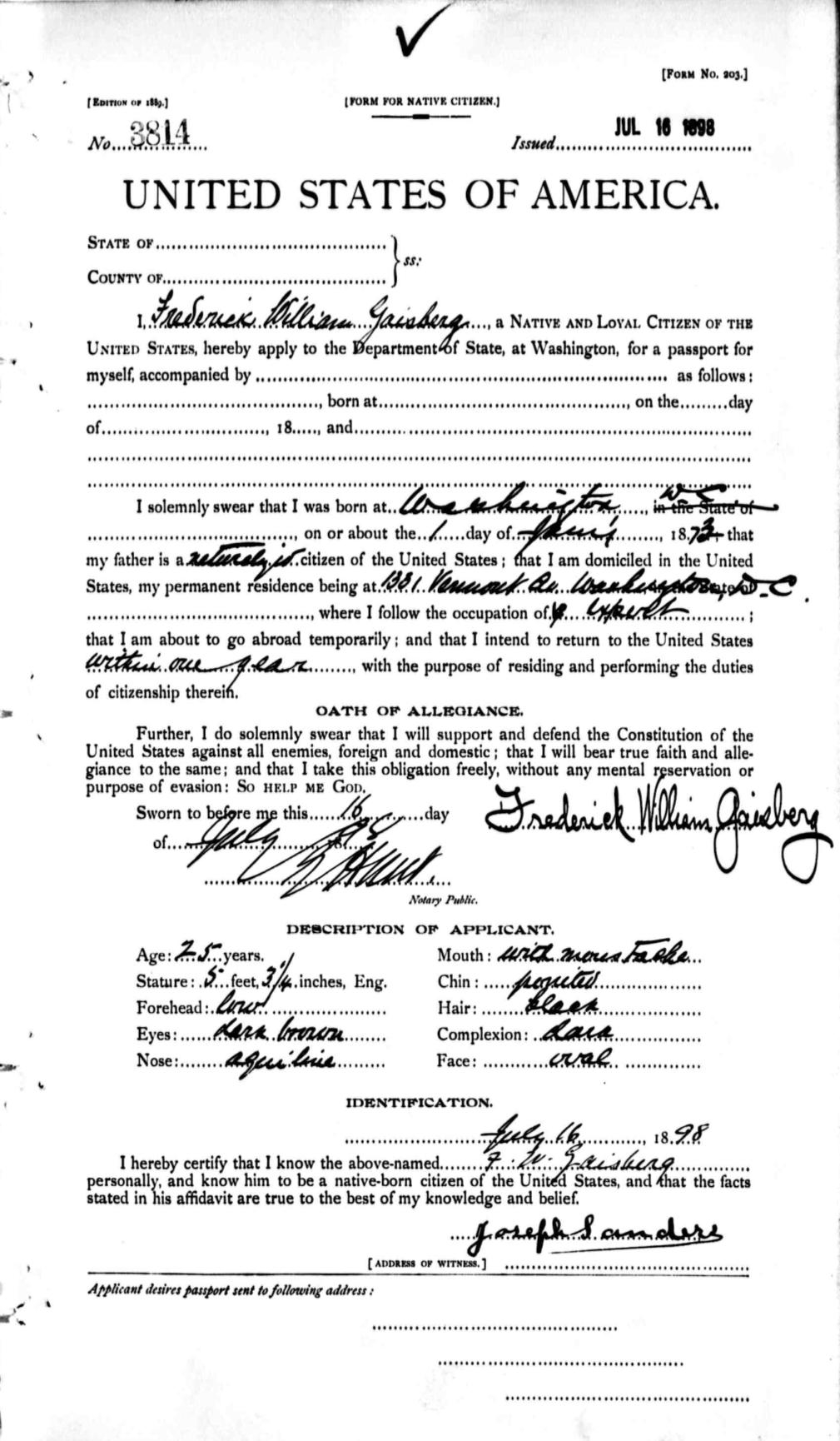
On the 23rd of July 1898 Fred Gaisberg, at the age of 25 set sail on the 9 a.m. SS Umbria Cunard ship from New York to Liverpool. He was sent by the inventor of the Gramophone, Emile Berliner to London as one of the first sound engineers to set up a recording studio in London to cater to the European market. GAISBERG_DIARIES_11.pdf - Adobe Reader

Fred’s personal preparations for life across the sea were simple. “My baggage consisted of a complete recording outfit plus a twenty-five dollar bicycle with pneumatic tyres, and a notebook stuffed with receipts addresses and advice… “

GAISBERG_DIARIES_1.pdf - Adobe ReaderAt only 25 years old one can only imagine the excitement, curiosity and fear Gaisberg would have felt as his cousin, Carrie, waved him goodbye from the New York harbour. He must have wondered…would he like the new people? Would London be welcoming? Would the journey be comfortable?

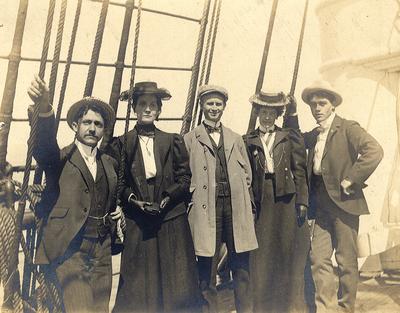
Gaisberg (L) and Joseph Sanders (C) aboard the SS Umbria en-route to Liverpool, July 1898Copyright: EMI Group Archive Trust

Although he must have been anxious he was certainly ambitious, taking the opportunity to meet potential contacts and artists while aboard. During his journey he met the music hall comedian Bert Shepherd, whose wide repertoire and contagious laugh drew in Gaisberg. The two became friends and before leaving the SS Umbria Gaisberg  secured a promise from shepherd to visit the studio in London once it was set up.

A Royal Arrival

Crying-Baby-001

The EMI Archive Trust would like to join the whole world in saying CONGRATULATIONs to William and Kate, the Duke and Duchess of Cambridge, on the arrival of their beautiful baby Boy.

For many centuries the royal family has always been incredibly supportive of the arts and music. We are excited to watch this new baby grow and continue that tradition.

The Gramophone Company, His Masters Voice and EMI have always had very strong links with the royal establishment since its beginning at the start of the 20th century.

GABPCA71I2XD

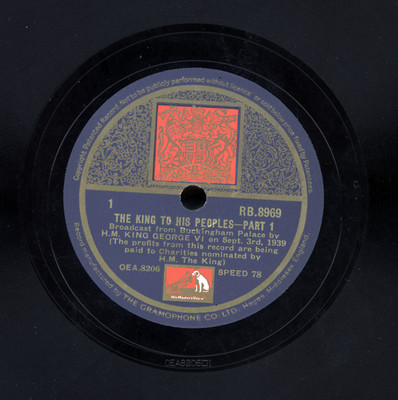
The King to his people’s Part 1 and 2. Broadcast from Buckingham Palace by H.M King George VI on September 3rd 1939 recorded exclusively with His Masters Voice Records.

retrieve[8]

Empire Day Messages; To the Girls and boys of the empire from His majesty King George the fifth and her majesty Queen Mary. Recorded at Buckingham Palace exclusively with His Masters Voice Records.

Scott’s Gramophone Great Tour

courtesy of EMI Group Archive Trust

In 1910 this beautiful HMV Gramophone was loaned by The Gramophone Company to Captain Scott to keep the sailors and expedition team entertained as they made their way to the South Pole.

Scott took with him two HMV “monarch” gramophones, donated by The Gramophone Company, which later became EMI, together with several hundred 78rpm discs, chosen to boost the team’s morale.

courtesy of EMI Group Archive Trust

Scott’s Gramophone has now returned safely back to the EMI Archive Trust after another epic journey to Australia, New Zealand and back to the United Kingdom with the award winning the Natural History Museum’s” Scott’s Last expedition” exhibition, June 2011-June 2013.

The EMI Archive Trust worked closely with EMI to make a collection of recordings played, and recordings likely to have been played on Scott’s fateful last expedition to the South Pole.

‘Scott’s Music Box is available as download or double CD. (available here.)

$(KGrHqZ,!rQE-ZKL,-eGBPoKBVlNmQ~~60_35[1]

The Proms 2013

Today marks the start of one of the World’s biggest Classical music festivals. The BBC Proms begins with a concert at the Royal Albert Hall featuring Sally Matthews (soprano,) Roderick Williams (baritone,) Stephen Hough (piano,) BBC Proms Youth Choir, BBC Symphony Chorus, BBC Symphony Orchestra, Sakari Oramo (conductor) in a performances of Julian Anderson – Harmony (BBC Commission, World Premiere,)  Britten – Four Sea Interludes from ‘Peter Grimes,’  Rachmaninov – Rhapsody on a Theme of Paganini,  Lutosławski – Variations on a Theme by Paganini and Vaughan Williams – A Sea Symphony.

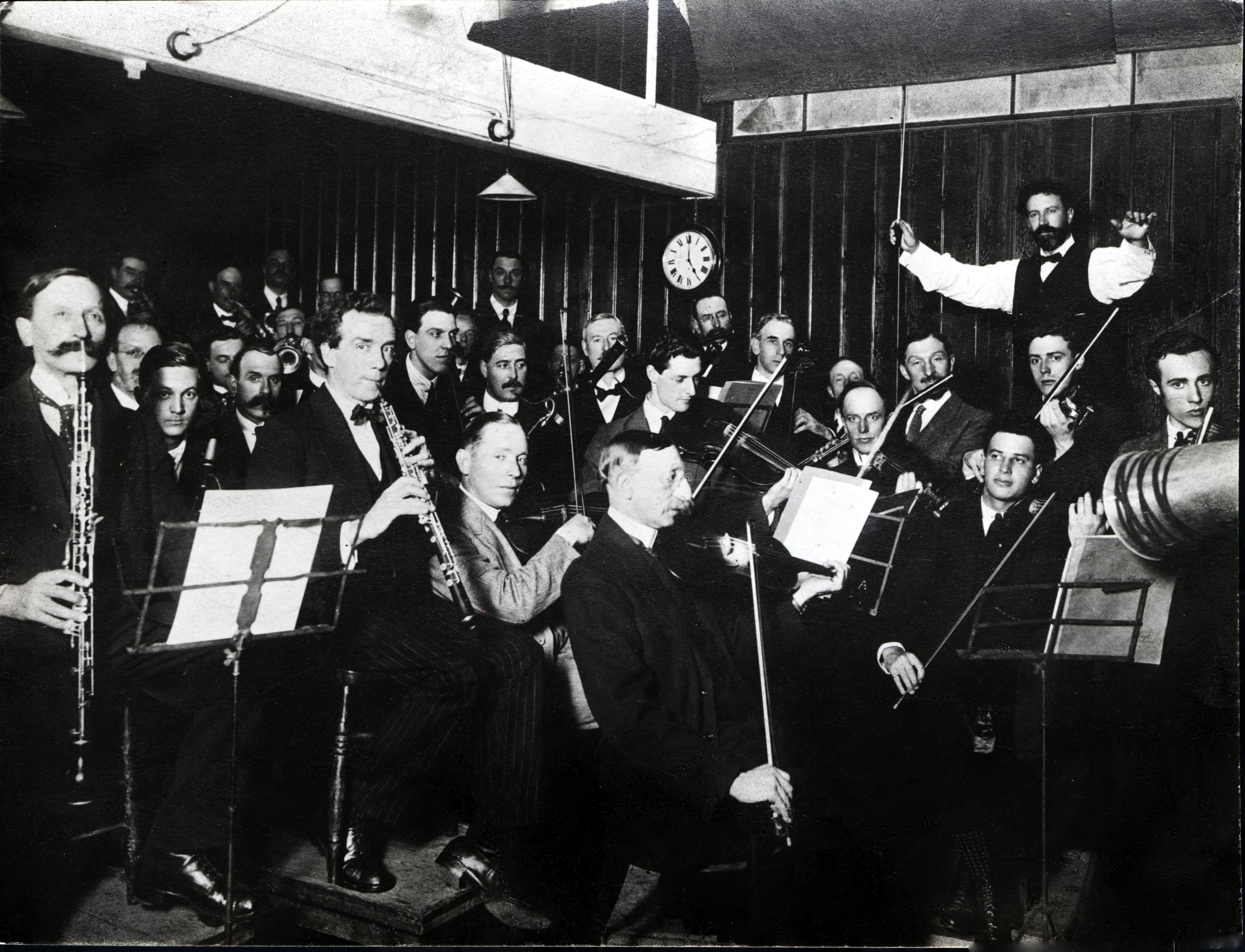
Sir Henry Wood recording with the Queens Hall Orchestra for the Columbia Gramophone Company around 1912 © EMI Group Archive Trust
Sir Henry Wood recording with the Queens Hall Orchestra for the Columbia Gramophone Company around 1912  © EMI Group Archive Trust

This year the Proms will be broadcast to classical music enthusiasts all over the world. Many of the concerts and performances will be recorded and made available for purchase. It’s hard to imagine now but just 126 years ago a piece of music could only be heard when the audience was present, and as such was only available to those who could afford a ticket to see the best performers. At the end of the 19th century the Gramophone Company revolutionised this idea, making audio recordings available across the globe.

Tonight’s opening show which will be available via radio, TV or at the Royal Albert Hall itself is built upon the 126 year old legacy of Emile Berliner (inventor of the Gramophone) and the early Gramophone Company founders.   But for now relax and enjoy this clip of the God Father of the Proms Sir Henry Wood.


Happy American Independence day!

In the early days of the Gramophone Company the British founders worked closely with their American counterparts. A lot of the initial success can be attributed to one of the first sound and recording engineers – American Born Fred Gaisberg.

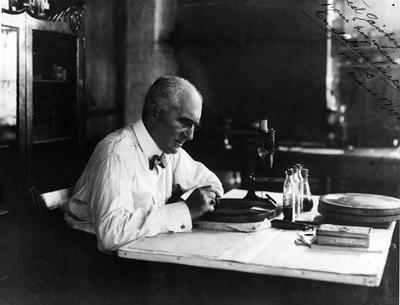
Fred Gaisberg
Fred Gaisberg, Copyright: EMI Group Archive Trust

He began working on the newly invented gramophone in the late 19th century and was taken on by the Gramophone Company in 1898.  Read more about the work Gaisberg did as one of the first sound engineers on a previous blog post here

Fred Gaisberg with Sinkler Darby, Copyright: EMI Group Archive Trust

On this very day 113 years ago (4th of July 1900) Gaisberg himself was en route to Milan to record for the Gramophone Company as recorded in his personal diary. As one of the company’s best sound engineers he spend a lot of time in mainland Europe recording popular local musicians.

“Wednesday, 4 July 1900 [The Vatican → by train to Florence → Bologna → Milan]
“We started for Milan, passing through Florence and Bologna.
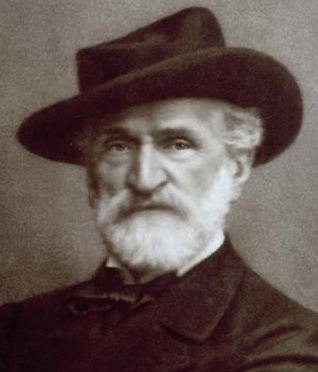
Arriving at the Hotel Milan about 9 o’c we entered, and were lucky enough to see the great composer Verdi. Fine-looking maestro now bent with age, yet with a distinguished look. He must be about 86 years old.” FG

File:Verdi-photo-Brogi.jpg

Giuseppe Verdi

So  please be upstanding for AMERICA and STAR SPANGLED BANNER by the Victor Brass Quartet – 1909