
Russell Hunting day #4: Patriotic recordings

This week we are planning to run a five day series of blog entries about Russell Hunting, a maverick who was involved at the start of the very start of the record business when its pioneers were searching to find the best business model to capitalise on the new sound-recording and playback technology. Hunting tried all sorts of ways to make money. One or two of them sailed close to the wind. None were boring. This is day #4 of 5 about the early years of Russell Hunting.

In the autumn of 1899, the United Kingdom was embroiled in the Boer War and the newspapers were dominated by stories from the front. Fred Gaisberg had the idea for a mini drama to be acted out in the recording studio. But Gaisberg’s friend, Russell Hunting, fresh from his attempts at comedy and semi-pormographic recordings, had a better idea:

It was, as Gaisberg later recalled, for “a descriptive record entitled “The Departure of the Troop Ship”, with crowds at the quayside, bands playing the troops up the gang-plank, bugles sounding “All ashore”, farewell cries of “Don’t forget to write”, troops singing “Home Sweet home”, which gradually receded in the distance, and the far-away mournful hoot of the steamer whistle.
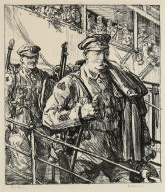
The record became enormously popular and eventually historic. It brought tears to the eyes of thousands, among them those of Melba, who declared in my presence that this record influenced her to make gramophone records more than anything else. I was directly and solely responsible for acquiring “The Departure of the Troopship” for my company, and together with my good colleague Russell Hunting, its author staged the recording. ”

Russell Hunting stories #3 1898: Oi! Where are you going with those records?

This week we are planning to run a five day series of blog entries about Russell Hunting a maverick who was involved at the start of the very start of the record business when its pioneers were searching to find the best business model to capitalise on the new sound-recording and playback technology. Hunting tried all sorts of ways to make money. One or two of them were close to the wind. None were boring. This is day #3 of 5 about the early years of Russell Hunting.

After coming off worse in a skirmish with the law and finding himself at the pleasure of the US government for 3 months in 1896, Russell got in another scrape but this time the boot was on the other foot. Hunting found himself to be one of the very first victims of dubious record company accounting….

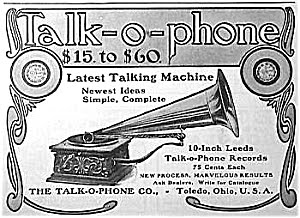
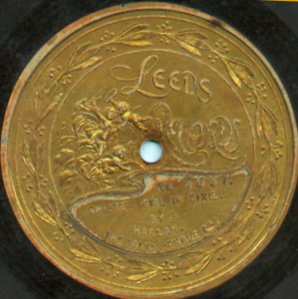
In 1898, a cylinder record company called Leeds Talk-O-Phone contracted Russell to record a version of one of his famous recording set-pieces which was called “Cohen at the Telephone”. Hunting was paid $5 per “round” for his troubles. A round was a recording into 4 machines that in turn produced about 100 acceptable duplicates of a cylinder.

At the end of the fourth round Hunting spotted a man covertly taking a batch of cylinders away from the studio. Hunting pounced and discovered additional copies of the “Cohen at the Telephone” recording. Leeds Talk-O-Phone were paying for four rounds but recording far more cylinders. Copyright law had not been established for recordings at this time, but Hunting accused Leeds Talk-O-Phone of attempting to defraud him.

This time Hunting was more successful than he had been with his skirmish with the law over obscene recordings. Leeds Talk-O-Phone, according to Hunting, made good upon being threatened with exposure.

This was not the end of Leeds Records naughtiness. In April 1909 Victor triumphed in a lawsuit for patent infringement, and Leeds Records and Talk-O-Phone went out of business.

Big pink foot for Leeds Talk-o-phone

Russell Hunting stories #2 1896: obscenity, filth, lasciviousness; the record business discovers smut sells!

This week we are planning to run a five day series of blog entries about Russell Hunting, a maverick who was involved at the start of the very start of the record business when its pioneers were searching to find the best business model to capitalise on the new sound-recording and playback technology. Hunting tried all sorts of ways to make money. One or two of them sailed close to the wind. None were boring. This is day #2 of 5 about the early years of Russell Hunting.

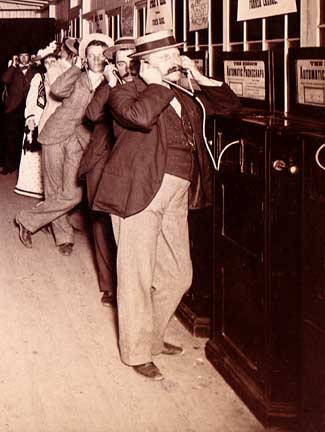
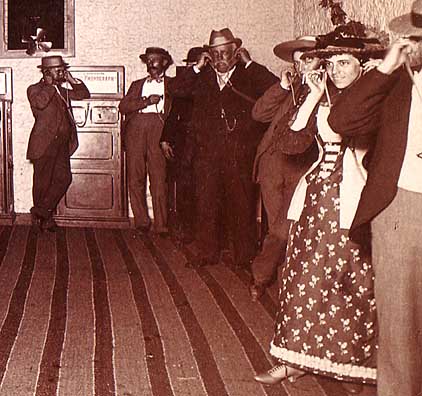
Fred Gaisberg recorded Russell Hunting doing his “Michael Casey” comedy routines in 1894. Hunting’s next move was to try something a little racier. Just as the invention of the printing press in the 1400’s and the internet more recently were seized upon by the pornographers of their day, people experimented with recorded smut. Russell Hunting among them. He recorded a series of obscene recordings under new pseudonyms, including Manly Tempest and Willy Fathand, and and marketed them to saloons, amusement arcades and other gathering places with nickel-in-the-slot phonographs. These saloons were where most people listened to records in those days. The playback machines were too expensive for home entertainment for most people in the very early days of the business.

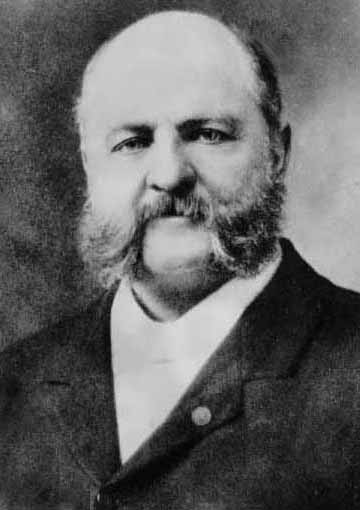
These rude recordings were popular and successful but they were seized upon by a newspaper who called them “the abuse of a great invention.” Soon Anthony Comstock, the crusading founder of the recently formed New York Society for the Suppression of Vice, was on the trail of indecent cylinders, chasing down distributors and performers. Comstock was a formidable opponent. He was a super-charged fore-runner of Mary Whitehouse who rigorously sought to stamp out “obscene, lewd, or lascivious” material wherever he could find it. Comstock also opposed any information relating to birth control and human reproduction. He became a hero figure to J.Edgar Hoover who visited Comstock in his old age and studied his methods. You would never guess what Comstock was like from his picture…

Comstock was not daft, however. On June 24, 1896, a detective working for Comstock came to Hunting’s Manhattan home, posing as a collector of saucy songs. He hired Hunting to record two cylinders of smut and, when Hunting had fulfilled his side of the bargains, promptly arrested our Hero who was later sentenced to three months in prison for violating obscenity ordinances that normally governed written literature and visual images.

But don’t worry, dear reader. A number of these recording were recently discovered, cleaned up and released as a CD called “Actionable Offences” by Archeophone Records and are available for purchase here. Phworrrr!!!!

And Russell Hunting would serve his time, dust himself down and step back on the rollercoaster that was his life in recorded music…..

Russell Hunting stories #1 1894: Mephistopheles in red tights haunts Fred Gaisberg

This week we are planning to run a five day series of blog entries about a maverick who was involved at the start of the very start of the record business when its pioneers were searching to find the best business model to capitalise on the new sound-recording and playback technology.

Patrick Feaster, a music historian, explained. “We have long thought of the phonograph as something that simply reproduced music but early uses of the phonograph were incredibly experimental. People were trying pretty much everything, trying to figure out what they could put on these recordings to make a buck, everything from hymns and prayers at one extreme to obscenity on the other end.”

Russell Hunting was a right man in the right place as the record business came into being. An intriguing mixture, he was part entrepreneur, part rogue, funny, unconventional, sometimes the artist and occasionally a business executive. Things appear to never have been dull when he was around. This is day #1 of 5 about the early years of Russell Hunting, a big extrovert so retrospectively elusive that we can only find this one very small photo of him.

Hunting was born in 1865 and would have been 12 years old when Edison invented the phonograph and 29 and working as a thespian by the time that he (perhaps inevitably) entered the orbit of Fred Gaisberg.

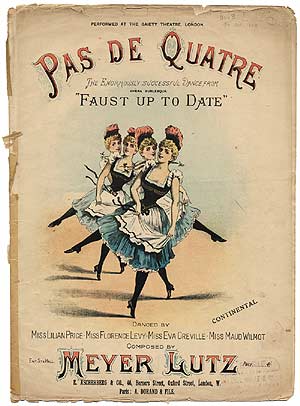
When Gaisberg threw in his lot with Emile Berliner’s new gramophone business, his primary role was to make recordings that Berliner could use to demonstrate the quality of his new invention. After he had completed the first batch in 1894 Hunting burst into his life, “The much advertised Burlesque show entitled Faust Up-to-Date visited the Albaugh Theatre next door to our lab which was at 1410 Pennslyvania Avenue, Washington. The stage manager was Russell Hunting. He also played the part of Mephistopheles, and, dressed in red tights was shot up from the bowels of the theatre into the midst of a bevy of dancers.

I knew him as the originator of the “Michael Casey” series of Phonograph records. They consisted of rapid-fire cross-talk between two Irish characters, with Hunting taking both parts. His fine voice had an infinite capacity for mimicry. In his spare time he made these cylinder records in his hotel room and they had become famous among exhibitors.

I argued with Berliner that by an investment of $25 ($2,200 in today’s money) for five titles, we would have a dazzling attraction in our campaign for capital. It was, for us, a huge investment, but we took the plunge…”

The Michael Casey records were comedy records. They were very popular and did brisk business with the patrons of the nickel in the slot phonograph listening machines. Hunting recorded the early ones before being replaced by a series of other actors who then played Michael Casey in much the same way that we’ve seen a number of different actors play James Bond. You can hear on of Hunting’s efforts “Casey at the Telephone” here

A wider catalogue of Hunting’s recordings are available on the Charm website, here
.

Congratulations to Tony Wadsworth CBE

Many congratulations to Tony Wadsworth on being awarded the CBE for services to the Music Industry in the Queen’s Birthday Honours List. Tony is Chairman Of the BPI and ran EMI’s UK operation for many years. It’s difficult not to sound rather creepy when somebody you know and admire gets a gong, but Tony is one of the real good guys. Liked and admired by artists, respected by colleagues and rivals and genuinely loved by his staff, Tony has had (and continues to have) a positive influence on the development of the UK music industry. And in a business that can sometimes lead to “executive cynicism” Tony retains a deep love of music. He’s put in his time at the coal face of Richard Thompson concerts but is equally excited by, and supportive of, the very latest quality music.

Tony is also a trustee of the EMI Archive Trust and occasional reader of this very blog which he calls “the dog blog”! This little gush will no doubt embarrass him but we really don’t care! Congratulations to Tony and family on this well deserved honour.

UPDATE:

The honours continue  to shower down on Tony Wadsworth. He was recently invited as a special guest on the much acclaimed Word Magazine podcast to talk about his career in the recording industry and his report for MusicTank on the future role of the record label which is called “Remake, Remodel: The Evolution Of The Record Label”. You can download the podcast here and obtain Tony’s report here.

Setting up a new record company #7 Sell your product!

This week we aimed to tell the story of how Emile Berliner and Fred Gaisberg set up their record company in America in the late 19th Century. Seven blog entries on seven days. This is day #7. The final day; we made it! Its 1896. The new Philadelphian investors have decided that the United States Gramophone Company needs a permanent recording studio and a retail shop for gramophone players and discs and that it should be based in Philadelphia itself. Fred was selected to set up the recording studio which was above a shoe shop in Twelfth Street, Philadelphia. A new colleague Alfred Clark, then 22, was chosen to establish the gramophone shop. Clark and Gaisberg had similar backgrounds, both had also previously worked for Edison. Clark however was a much snappier dresser as Gaisberg later recalled.

“He was..a youth big and well proportioned, perfectly dressed in a tailor made suit which struck a note of distinction. Further his dark eyes and curly brown hair set off by a boyish blush whenever he spoke made him irresistible, quite apart from his wisdom and the fact that he had emerged from shadow of the great Edison.”

Gaisberg and Clark headed to the City of Brotherly Love to start this new record business, Gaisberg with his recording and Clark with his retail. A&R and distribution. Both would go on to play vital roles in the development of The Gramophone Company; Fred would make many of its recordings and Clark would eventually become Managing Director of the Gramophone Company and then the first Chairman of successor company EMI.

But back in 1896 all of this was ahead of them. Gaisberg fondly remembered the early days in Philadelphia.”Clark and I had living rooms adjoining the studio and so were frequently in each other’s company and exchanged views on the artist’s life, the gramophone industry and it’s future. That it had a future neither of us doubted. We were both in on the ground floor and had all the enthusiasm of youth.

There were evenings when we stopped at home and enjoyed the leather perfumed atmosphere of the studio over the shoe-shop. There was a piano, as usual mounted on a two foot high platform, and the recording machine invited exciting experiments in sound recording. Clark had a violin he was very fond of and occassionally tucked under his chin….

We..often found ourselves as guests in the homes of our (investor) directors..and in the more modest homes of Eldridge R Johnson and B.G. Royal then the small mechanics who ran the small tool shop across the river in Camden. At that time they were making the first two hundred spring-motor gramophones for the company. Their little shop was destined to expand into the great Victor Talking Machine before the decade was over.”

So as we look back on the 7 blog entries of this week that tell the story of how Fred Gaisberg and Emile Berliner set up the United States Gramophone Company we can see the years 1893-1896 were key to the development of the gramophone business. Berliner had, with the help of Eldridge Johnson, perfected his disruptive gramophone technology and the discs that it played. He had raised money to develop the business and had brought on board three key members of staff – Gaisberg as a PAID employee, Clark and Sinkler Darby. Technology + Capital + People = Business. Oh, and they found an artist or two.

What next? Well…1897 would see the push to internationalise the business. Next stop: World domination.

Setting up a record company #6 Getting the right people onboard

This week we plan to tell the story of how Emile Berliner and Fred Gaisberg set up their record company in America. Seven blog entries on seven days. This is day #6. It’s late 1895 and the fledgeling gramophone enterprise has just raised $25,000 from the Philadelphian syndicate to expand the business. Berliner now begins to look around and take on more staff.

His first move was to increase his research staff. Fred Gaisberg suggested his brother Will, who was just about to leave school and was desperate to join his big brother in the recording game. Berliner was happy to take the younger Gaisberg on but Fred’s father thought otherwise. Will recalled in later years, “My father informed my brother that he did not think that he should let two of his sons start their careers in such an uncertain business as the talking machine. His friends with whom he had discussed it agreed with him. I was put to selling coal, and a school chum of mine, William Sinkler Darby was given the position.”

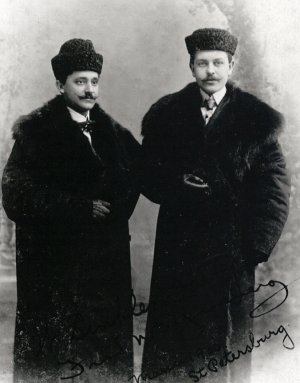
William Sinkler Darby would go on to have a long recording career and would travel the world with Fred Gaisberg making many of the first recordings in each country that they visited. We followed them in their Russian trip of 1900, where they picked up these wonderful bearskin coats (not so wonderful if you are a bear.) Darby is on the right, Fred on the left.

Was Will Gaisberg bitter? Probably a little. Did he while away his life in the coal business? No. His father’s reticence to allow him to join elder brother Fred restrained him for only a short while. In early 1901 Will followed his brother across the Atlantic to join him at the Gramophone Company in Maiden Lane.

Russ Terrana – the most successful recording engineer of all time?

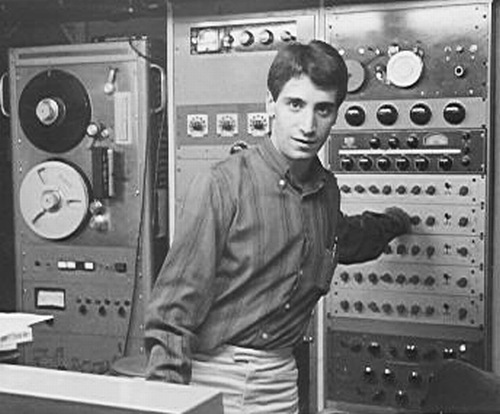
Russ Terrana was the Motown recording engineer who recorded and/or mixed down 89 US #1 records. Yep that’s right EIGHTY-NINE NUMBER ONE RECORDS!!!

He joined Motown in 1966 when the company bought the Golden World Studio in Detroit that Terrana was working for at the time – Motown were having so many hits that they needed the extra capacity. He worked for Motown until 1988 when Berry Gordy sold the company to Polygram who promptly closed the Hollywood Hitsville that Russ had moved to work at.

You can see the full list of all 89 #1’s here, including videos.

And Joe Klein writes a very detailed biography of Terrana’s career. And boy what a career. He must be the most successful recording guy of all time? Well, do you know anybody with more hits?

This is one of them: